



New collection
Earth Line Skirting Boards




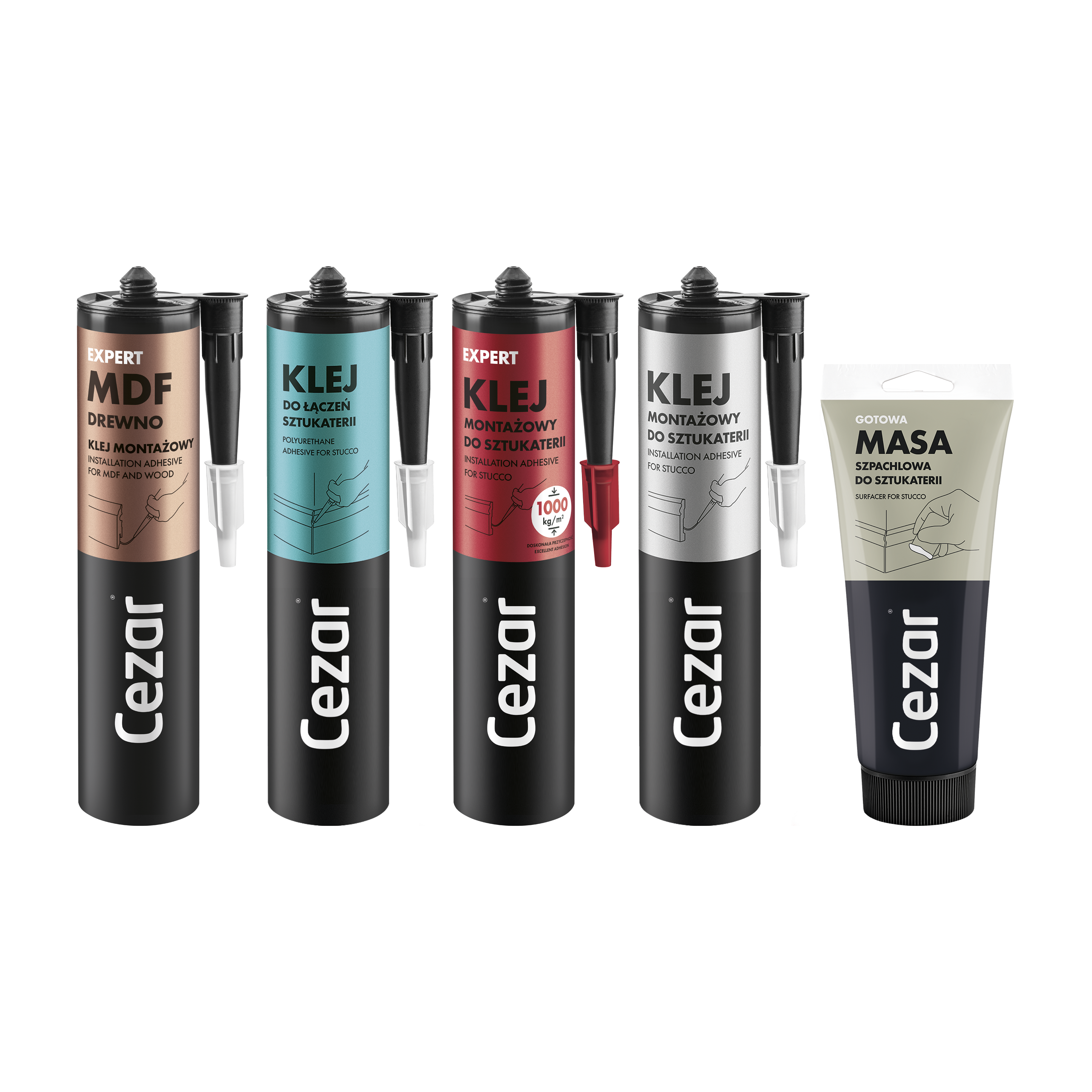
Buy assembly adhesives
Buy original accessories


LED PROFILE


ALUMINUM OR STAINLESS STEEL




External profiles are narrow elements for finishing tile edges, which effectively protect them from damage and chipping. Check our offer and choose an external profile that will complement your project.
Read more
External tile profiles – functions and application
An external tile profile is quite narrow and consists of two parts:
- decorative and visible on the outside,
- perforated or specially shaped mounting part, which is embedded in the tile adhesive layer.
A properly selected tile edge profile creates even and durable transitions between different finishing materials. These can be, for example, connections between ceramic tiles and plaster, paint, wall panels, or other decorative cladding. We also offer an external tile corner profile, which works well for finishing wall corners, countertops, or bathtub enclosures.
A tile finishing strip serves the following functions:
- protecting tile edges from mechanical damage,
- protecting corners during cleaning, moving equipment, or using stairs and countertops,
- aesthetically finishing tile edges in places where the tile is visible.
In our store, you can also buy internal tile profiles.
How are external tile profiles installed?
Tile profiles are installed during tile laying, before they are permanently glued. To do this, you should start by precisely cutting the strip to size and applying tile adhesive. Then, the perforated profile wing is embedded in the adhesive, ensuring it remains perfectly vertical or horizontal, and then the tiles are laid.
In our offer, you will also find practical installation accessories, such as connectors or end caps, which allow you to aesthetically finish profile connections and adapt them to a specific application. After laying the tiles, grouting is performed, so that all finishing elements form a single, cohesive whole.
Materials and colors of external profiles
External tile profiles can be made of aluminum or PVC. Thanks to the different sizes and color versions, you can easily choose a product that matches the tiles and interior design.
PVC or aluminum external tile profile – what to consider when choosing?
When choosing this element, it is worth considering primarily the place of application, the expected finishing effect, and the durability of the material.
An external PVC tile profile is made of plastic, which is lightweight, flexible, and available at an affordable price. An external aluminum tile profile, on the other hand, is characterized by greater rigidity, damage resistance, and an elegant appearance. It uses anodized aluminum, which increases the surface's resistance to abrasion, moisture, and mechanical damage. This makes it perfectly suited for modern and heavily used interiors.
Edge profiles – color versions, dimensions, and finish
The aluminum profile and PVC external corner are available in many variants, allowing them to be paired with any type of tile. The offer includes standard RAL colors, such as white, black, silver, gold, beige, brown, and gray, as well as more unusual shades, including ivory, caramel, and Silver El-Poler.
A matte finish works perfectly in minimalist and modern projects, while a glossy finish pairs wonderfully with classic and glamour styles.
A tile profile has a standard length of 2.50 m, and its zeroing can be: 6 mm, 8 mm, 9 mm, 10 mm, and 12 mm, allowing you to choose a model for a specific tile thickness.
Corner tile profiles are also available in many popular sizes and finish styles.
FAQ – external tile profiles
How does an external profile differ from an internal one?
An external profile is used at the ends of tiles, e.g., on wall edges, stair treads, or enclosures. An internal profile is installed where two surfaces meet inside a room.
PVC or aluminum profile – which one to choose?
A PVC profile will work well for finishing tile edges in areas less exposed to heavy use. An aluminum profile is worth choosing for elegant interiors when you care about durability and a timeless visual effect.
How to match the profile width to the tile?
The profile width should match the tile thickness so that its edge is flush with the surface of the cladding.
How to install a tile profile?
Corner tile profiles are installed during tile laying by placing their mounting part in the adhesive layer before gluing the cladding.
We offer a wide selection of extrusions, which are aluminum elements with different cross-sections, designed for creating durable structures and reinforcements. These include both closed profiles, ideal for building rigid and stable frames, and open profiles, which also work well as decorative elements. Aluminum profiles are available in many variants differing in cross-sectional shape, dimensions, and purpose. In our store, you can also order lightweight and practical PVC extrusions. U-shaped aluminum profiles and other models are available in a wide range of finishes and colors. Depending on the project currently being implemented, you can choose natural aluminum, reinforced anodized aluminum, or a subtle matte finish. In addition to the classic silver color, aluminum extrusions can also come in gold, which pairs perfectly with interiors decorated in the glamour style. All offered models exhibit high corrosion resistance, durability, and strength against external factors. The unique properties of aluminum ensure that the extrusions retain their stylish appearance and color for many years. We also offer high-quality brass extrusions recommended for premium projects. Rectangular, round, and flat aluminum profiles stand out for their versatile applications. They can be successfully used to create lightweight structures, DIY projects, fill elements, and functional building materials. Aluminum structures are used in various types of renovation and construction work, DIY projects, and interior design.� The different lengths and dimensions of extrusions make them easy to adapt to your needs. The universal length of 1 m or 2 m works well for making frames, shelves, enclosures, frames, and finishing elements. Profile joining methods include mounting adhesive, screws, bolts, and special connectors, which allow for the creation of durable and stable aluminum structures. In our online store, you can also buy reliable and very durable steel extrusions. The choice of extrusion depends primarily on its purpose, required strength, and type of construction. To do this, you need to match the profile shape, size, and thickness to the specific application. Natural aluminum retains the raw look of the metal and has a shiny surface, while matte silver is characterized by a smooth, subdued finish. Aluminum extrusions can be cut with a metal saw, a chop saw with a suitable aluminum blade, or a panel saw, and joined, among other things, using mounting adhesive, screws, bolts, or dedicated connectors. Aluminum extrusions are available in various lengths. Popular variants are 1 m or 2 m in length. A flat threshold profile is made of aluminum and is characterized by a low, minimalist shape, so that it protrudes only slightly above the floor surface. This design provides an aesthetic finish for the connection of two floors, levels differences, and effectively conceals expansion joints. We offer a flat aluminum profile in various dimensions, designs, and installation methods. As a result, you can easily adapt this element to modern interior designs. A flat aluminum threshold strip should pair perfectly with the type of floor, the gap width, and the interior design style. Our offer includes narrow threshold strips ideal for connecting standard transitions between rooms, as well as wider models, which will work well in a kitchen connected to a living room or other open spaces. Available dimensions are: An expansion threshold strip is available in several lengths: 0.90 m, 1 m, 2 m, 2.50 m, and 3 m. Individual models may differ in purpose and installation method: Such profiles will pair well with our offered LED baseboards made of PVC, MDF, or aluminum. Anodized aluminum coated with a protective layer is used to produce profiles, which increases its resistance to damage and wear. This material ensures a durable connection of coverings at the location of the expansion joint. The protective function is combined with timeless aesthetics. Aluminum profiles have a matte finish, and their rich color palette draws attention. Depending on individual preferences and project requirements, you can order: To this, be sure to add atmospheric ceiling lighting strips. High-quality flat threshold profiles perfectly protect various floor coverings. You can use them to connect laminate panels, vinyl panels, tiles, and also wooden floors. They also work well with underfloor heating, because aluminum conducts heat quickly and is resistant to elevated temperatures. The advantage of our products is the possibility of using different mounting systems adapted to the type of substrate and the selected strip model. A popular solution is mounting with adhesive, which allows you to quickly and aesthetically attach the profile without the need to drill holes. In this case, professional mounting adhesives should be used, ensuring a durable connection to the floor surface. Profiles designed for other installation methods are also available, e.g., using special plugs and screws placed in mounting holes. Such floor accessories increase the strength of the connection and guarantee that the strip remains stably attached to the substrate for a long time. A 5-in-1 profile allows a flat threshold strip to be installed not only with adhesive, but also using other mounting methods, e.g., with screws or mounting plugs. For narrow gaps between cladding, choose models with a width of approx. 25-35 mm. To cover larger gaps, you will need profiles with a width of approx. 40-80 mm. A flat threshold profile can be installed in several ways, e.g., using strip adhesive, screws, plugs, or joining several profiles into one longer strip. Yes, because they are made of aluminum, which conducts heat well and does not deform under the influence of elevated temperatures.Types of aluminum extrusions – square, rectangular, round, and flat
Aluminum extrusions – available shapes and dimensions
Finish and colors of aluminum extrusions
Application of aluminum extrusions
FAQ – aluminum extrusions
Which extrusion should I choose for my project?
How does natural aluminum differ from matte silver?
How to cut and join aluminum extrusions?
In what lengths are extrusions available?
Types of flat threshold profiles
Flat threshold profiles with widths from 25 to 80 mm – narrow, wide, and 5-in-1
Aluminum profiles – colors and finish
Application and installation of flat threshold profiles
FAQ – flat threshold profiles
How does a 5-in-1 profile differ from a regular glued profile?
What threshold profile width should I choose?
How to install a flat threshold profile?
Will flat profiles work with underfloor heating?