
⏱️ Reading time: 3 min
Moulding has redefined the approach to designing living areas. Between elegant classicism and understated modernism lies a common denominator – three-dimensional wall decoration, which gives an interior proportion, depth, and architectural character. In this guide, you will learn how to consciously select wall profiles to create a cohesive and durable setting for a representative living room.

Moulding in the living room – classic elegance versus modern minimalism
The main advantage of spatial decorations is their versatility. The choice of the right profile depends on the aesthetic you want to give your interior.
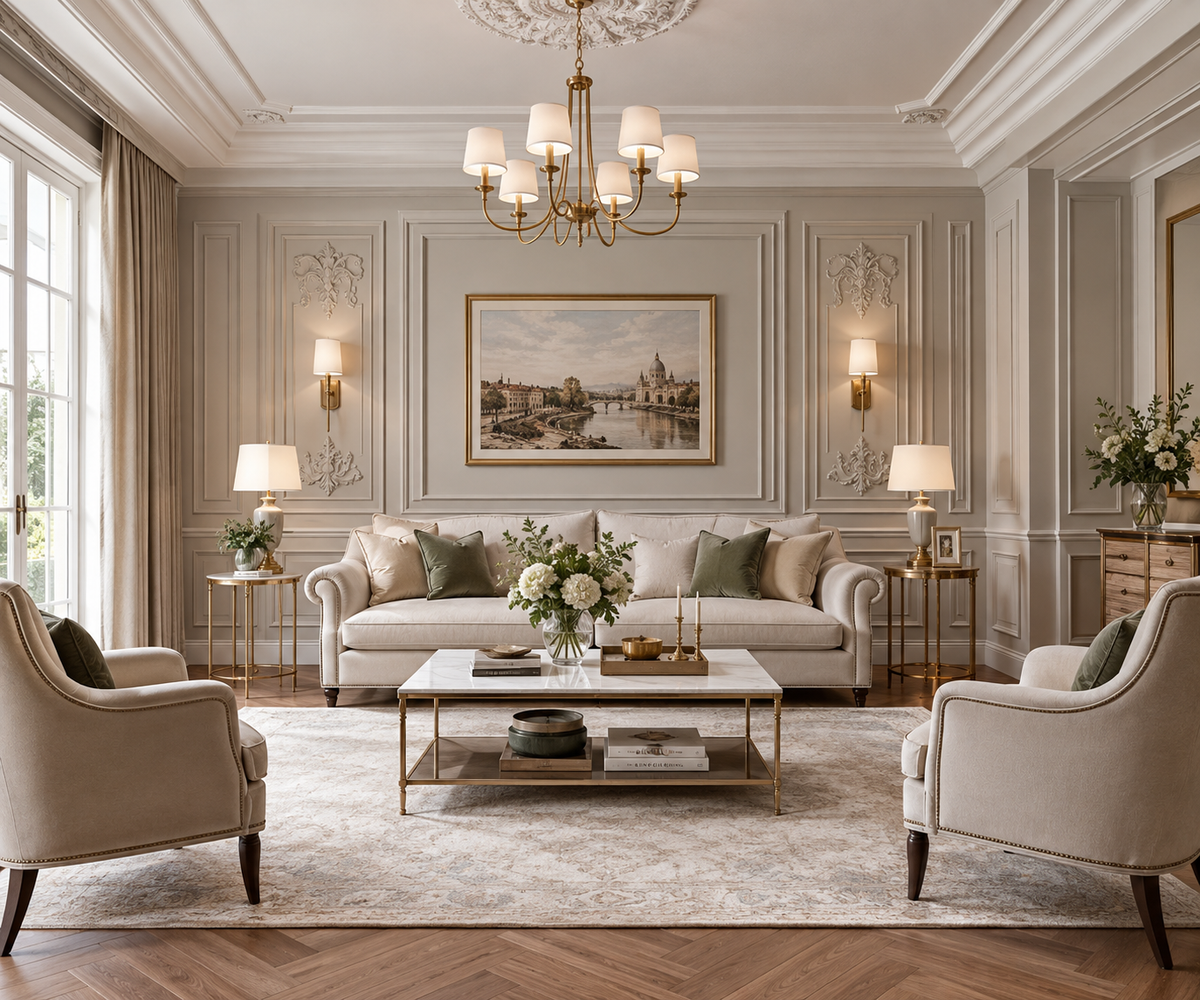
- Classic living room (French style, neoclassicism): Based on symmetry and decorative details. In such interiors, decorative frames, two-level arrangements, and moulding decorative elements enriched with floral or geometric motifs work perfectly. The whole is completed by decorative cornices at the floor and ceiling.
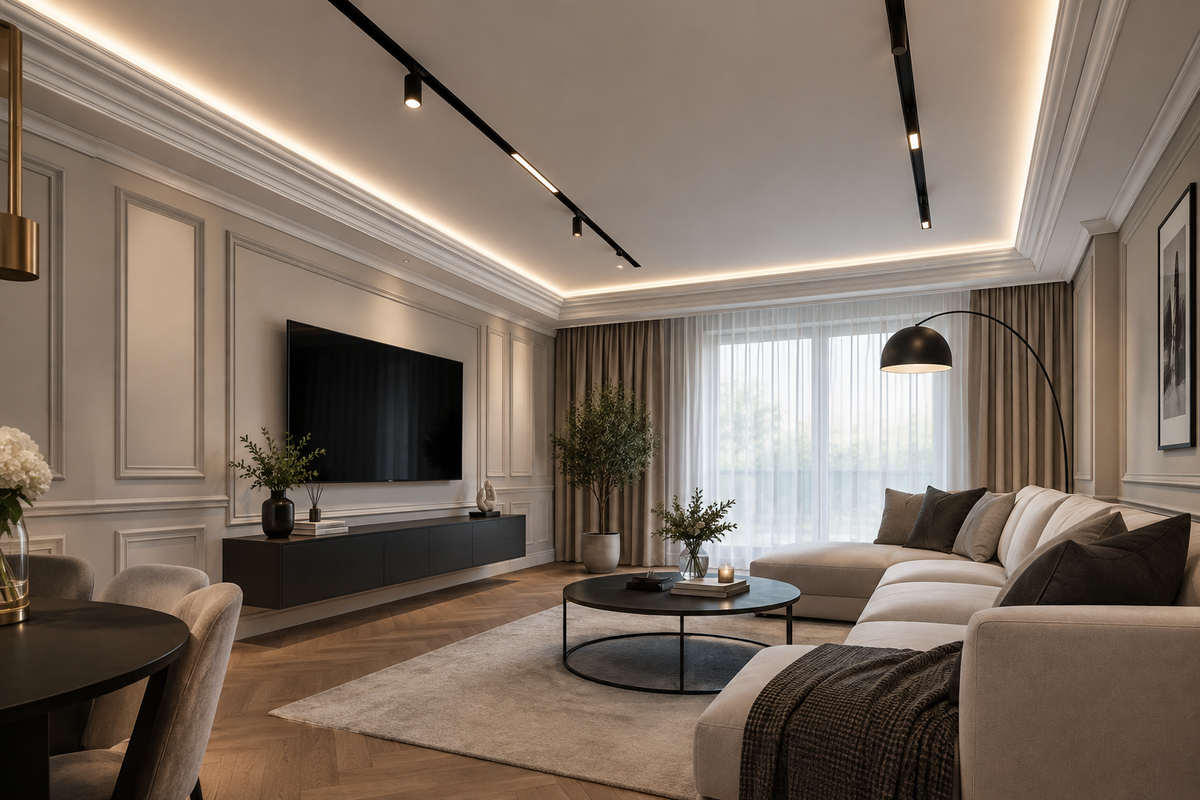
- Modern living room (minimalism, loft, modern organic): Focuses on clean lines and simplicity. Instead of intricate ornaments, wall mouldings with smooth surfaces dominate. Single, simple frames, vertical divisions that visually heighten the room, and hidden LED lighting create a minimalist yet extremely impressive design.

🛒 Recommended products from this category:
Check out our dedicated collection: Moulding and wall decorations and choose the perfect solution for your interior.
How to choose wall mouldings and panels to match the interior style?
Wall finishing requires a well-thought-out strategy. To avoid visual chaos, it is worth following three key criteria:
1. Material criterion and durability
In the living room, as a heavily used space, you should opt for materials resistant to impacts and mechanical damage. Instead of brittle plaster or dent-prone styrofoam, choose dense polymer composites or finishing boards. Durable smooth wall mouldings ensure resistance to everyday impacts from furniture and hassle-free maintenance.

2. Proportions and dimensions
For small or low rooms, choose subtle, flat profiles. Striking, three-dimensional elements and wide frames look best on large surfaces, where they do not overwhelm the interior.
3. Color scheme and finish
Painting the mouldings the same color as the wall creates an elegant, monolithic background effect with an interesting texture. If you want a strong accent, contrast the color of the frame interior or choose a contrasting finish.
Product synergy – combining mouldings with panels and skirting boards
Perfect wall design requires consistency at every height of the room. You will achieve the best visual result by ensuring smooth transitions between materials:
- Floor area: The lower edge of the wall decorations must harmonize with the floor. For modern designs, choose modern skirting boards, which create an aesthetic and moisture-resistant foundation for the entire composition.
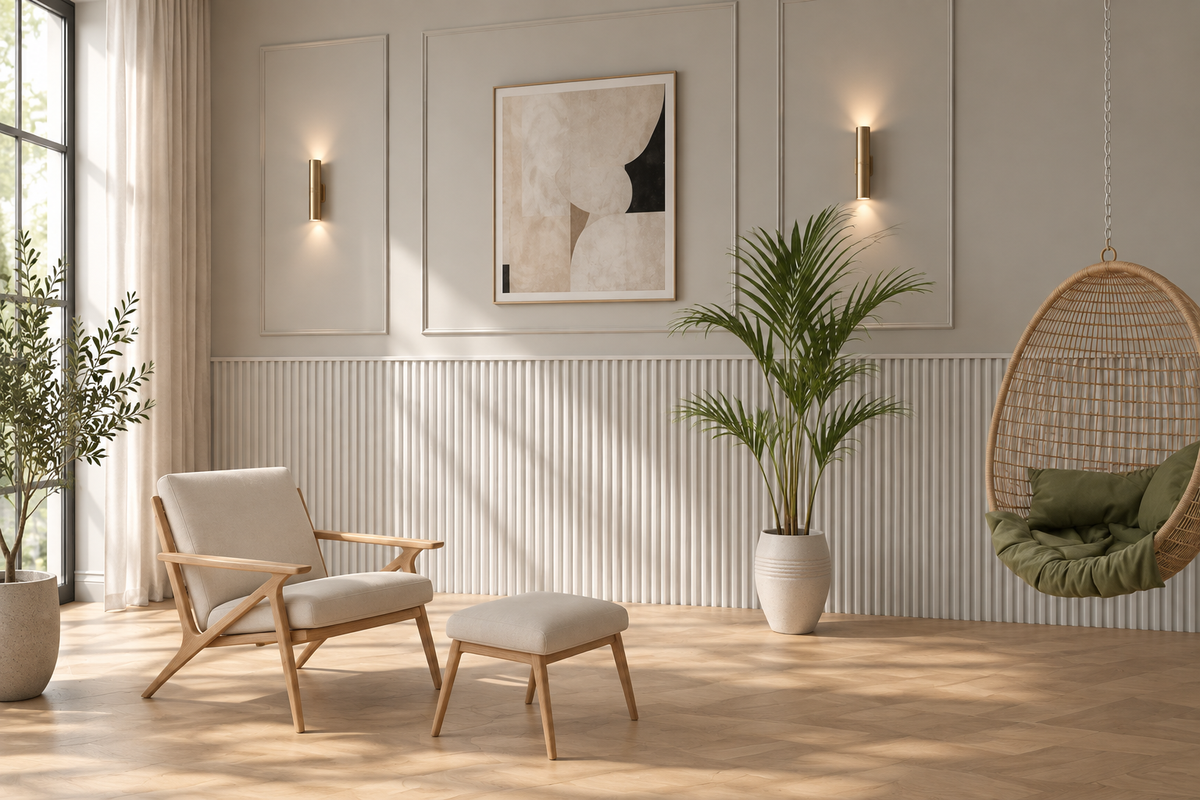
- Wall decoration area: Three-dimensional divisions are a perfect complement to classic frames. By using modern wall panels, you can designate a TV or relaxation area in the living room, giving it a unique texture.
- Lighting: Using LED strips in combination with wall profiles creates an atmosphere after dark, building a three-dimensional play of light and shadow.

💡 Also read:
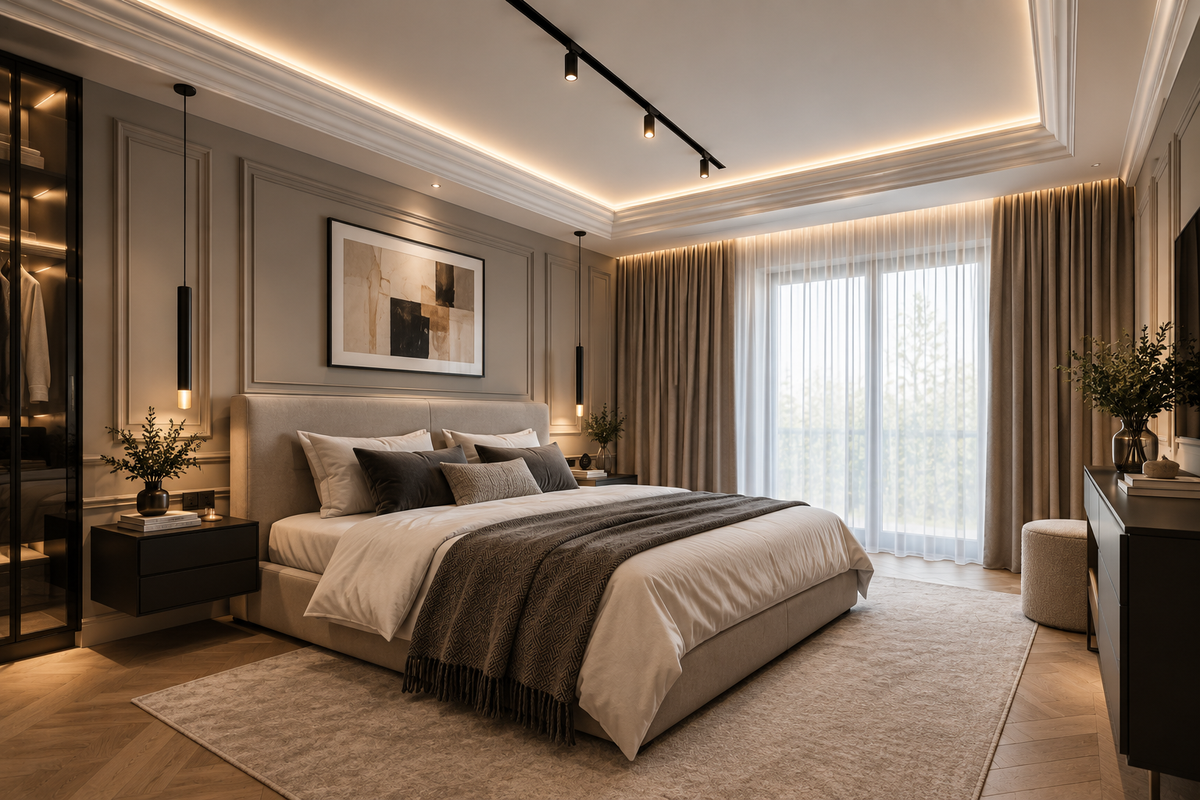
Bedroom in modern classic style – how to combine traditional elegance with modern technologyMost common mistakes when installing wall mouldings
Even the best quality material will lose its charm if you make installation or design mistakes:
- Lack of symmetry and alignment: Placing frames "by eye" without considering the furniture layout (e.g., sofa, dresser, or TV).
- Poor scale matching: Using overly thick, heavy profiles in small and low rooms.
- Incorrect mounting adhesive: Using adhesives containing solvents that can damage the material structure.
- Lack of profile acclimatization: Installing mouldings immediately after bringing them into the room without waiting 24 hours.
Summary – checklist for the perfect interior design
- Analyze the living room style: Choose smooth profiles for a modern style or decorative cornices for a classic interior.
- Mark the axes of symmetry: Plan the wall frames based on the main furniture points in the room.
- Choose durable materials: Opt for hardened polymers resistant to mechanical damage.
- Ensure consistency: Combine the mouldings with matching skirting and ceiling boards.
Frequently Asked Questions (FAQ)
1. What should wall mouldings for the living room be made of?
The best choice for the living room is profiles made of hardened plastics (e.g., HDPS, high-density polystyrene). They provide full impact resistance, are lightweight to install, and are easy to paint with any water-based paint.
2. Are wall mouldings suitable for a small apartment living room?
Yes, provided the right scale is chosen. In small interiors, subtle, flat wall mouldings in the form of single, vertical frames painted the same color as the wall work well, visually heightening the room.
3. What should wall mouldings be painted with after installation?
After installation and filling the joints with putty, the mouldings should be painted with solvent-free paint – readily available acrylic, latex, or ceramic paints used for painting walls will work perfectly.
4. Can mouldings be combined with decorative panels?
Absolutely. Combining traditional frames with modern accents, such as 3D wall panels or slats, is one of the strongest trends in contemporary design.
5. Where to find reliable profiles and inspiration for wall finishing?
You will find a wide selection of durable finishes and ready-made design solutions directly on the manufacturer's website, checking the offered moulding and wall decorations, which will allow you to create a complete living room design.
Share:
Curtain track cover – a clever way to hide glides and rails
Felt acoustic panels – a way to create a beautiful wall and improve acoustics (and innovative alternatives)