
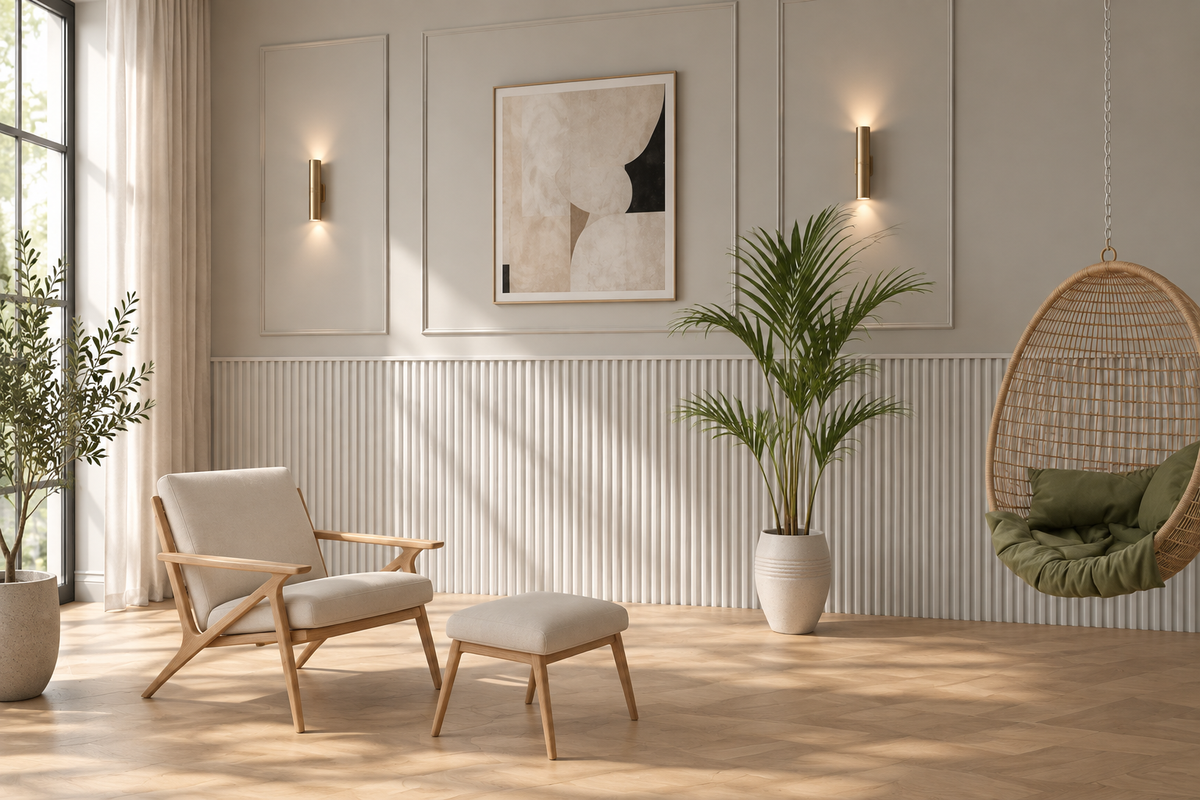
English wall panelling (decorative panel moulding) is a tried-and-tested way to add depth and texture to an interior. Traditionally associated with classic residences, today it works just as well in modern, neoclassical and minimalist designs. Creating decorative frames from mouldings as a DIY project can visually correct a room’s proportions, protect the lower sections of walls from damage and give flat surfaces a premium look.
The key to a successful result is choosing the right finishing elements: from lightweight wall mouldings and sturdy skirting boards to architectural details in the ceiling area.
1. Creating wall frames – choosing the right profile
English wall panelling is based on frames (also known as panels) attached directly to the wall. Their layout should complement the room’s geometry. Lightweight, moisture-resistant polystyrene wall mouldings are ideal for creating frames, offering perfectly crisp edges and easy workability.
Recommended product:
-
Name: Smooth PS wall moulding 21.5 × 14.8 mm Cezar L-2.44 m white matt primer
-
Dimensions: 21.5 × 14.8 mm
-
Length: 2.44 m
-
Material: High-density polystyrene (PS)
-
Finish: White matt lacquer / factory primer ready for painting
💡 Tip: Use a mitre box and a fine-toothed hand saw to cut polystyrene mouldings at a 45° angle. This will prevent the edges from fraying.

2. Creating a seamless backdrop with vertical panels
In areas subject to heavy use, such as hallways and passageways, you can replace traditional frames with full wall panelling or combine the two. Full-height panels can conceal uneven surfaces and help soundproof a room.
Recommended product:
-
Name: THALIA07 wall panel 155 × 6 mm Creativa by Cezar, white matt primer, 2.80 m
-
Dimensions: 155 × 6 mm
-
Length: 2.80 m
-
Material: Advanced polymer material (Creativa by Cezar)
-
Finish: White matt / paint primer
💡 Tip: The panel’s length (2.80 m) allows it to run from floor to ceiling without horizontal joins, ensuring a seamless finish.
3. The foundation of the design – a sturdy skirting board
The lower edge of English wall panelling should be finished with a clearly defined skirting board. Carefully selected MDF skirting boards provide a solid visual foundation, connecting the floor with the wall mouldings.
Recommended product:
-
Name: MDF skirting board 82 × 13 mm Cezar white RAL 9003 semi-matt lacquer 2.20 m
-
Dimensions: 82 × 13 mm
-
Length: 2.20 m
-
Material: High-density MDF board
-
Colour/Finish: Semi-matt lacquer, white RAL 9003
💡 Tip: Fill the gap between the top edge of the skirting board and the wall or panel with flexible paintable acrylic caulk before applying the final coat of paint.
4. Finishing the upper wall area and dressing windows
When designing wall panelling, consider how the wall will be finished at the top and how window coverings will be installed. Subtle, concealed curtain tracks paired with decorative mouldings create a cohesive architectural finish.
Recommended product:
-
Name: PrimeLine2 Cezar double aluminium curtain track with accessories, white, 2.50 m
-
Length: 2.50 m
-
Design: Two-track rail with a complete set of installation accessories
-
Material: Powder-coated aluminium
-
Colour: White
💡 Tip: Installing the curtain track directly on the ceiling and adding a decorative moulding cover creates the effect of fabric flowing seamlessly from ceiling to wall.
5. Modern details and contrasts – metallic accents
In modern interpretations of English wall panelling, traditional divisions can be enhanced with discreet metal profiles. Brushed aluminium angles work well as protection for external corners or as decorative dividers.
Recommended product:
-
Name: AL angle profile 15 × 15 × 1 mm L-2.50 m, light brushed gold
-
Dimensions: 15 × 15 × 1 mm
-
Length: 2.50 m
-
Material: Aluminium (AL)
-
Finish: Light brushed gold
💡 Tip: An aluminium angle fitted to an external corner of the panelling protects it from mechanical damage while also adding an elegant touch of colour.
How to achieve a cohesive look
Before starting installation, it is worth checking the design plan. Getting the proportions right determines the overall effect of the mouldings.
✔ Keep spacing consistent: The standard distance between frames and between a frame and the skirting board is 10–15 cm.
✔ Follow the principles of symmetry: Position the panels symmetrically in relation to the centre line of the wall or the main pieces of furniture, such as a sofa or bed.
✔ Keep the colours consistent: Painting the mouldings, frames and wall the same colour (for example, with a matt finish) creates a modern, seamless look.
✔ Use the right installation adhesives: Use hybrid adhesives or dedicated solvent-free moulding adhesives for polystyrene mouldings.
5 Golden Rules for DIY English Wall Panelling Installation
-
Plan the layout on the wall using painter’s tape: Before attaching the first moulding, mark out the frames with tape. This lets you assess the proportions without risking damage to the plaster.
-
Keep everything level and plumb: Use a laser or spirit level when installing each element. Even the slightest deviation will be visible once painted.
-
Seal all joints with acrylic caulk: Fill the points where the moulding meets the wall and the mitred corners with acrylic filler. This will prevent cracks caused by material movement.
-
Sand joints after filling: Once the filler has dried, gently sand the joints with fine-grit sandpaper (P220–P240).
-
Apply two coats of paint after priming: Use acrylic, latex or ceramic paint. The first coat evens out the substrate’s absorbency, while the second provides full coverage.
FAQ – Frequently Asked Questions
1. What material is best for making frames for English wall panelling?
High-density polystyrene (PS) or polyurethane mouldings are the best options. They are lightweight, completely moisture-resistant, easy to cut and have a smooth, paintable surface.
2. What adhesive should I use to install PS and MDF wall mouldings?
Use fast-drying acrylic dispersion or hybrid polymer installation adhesives designed for mouldings, with a high initial grab.
3. Can polystyrene mouldings be painted with regular wall paint?
Yes. Mouldings coated with factory primer can be painted with any water-based paint, including acrylic, latex or ceramic paint. Do not use paints based on organic solvents.
4. How high should English wall panelling be installed?
Classic English wall panelling reaches one-third of the way up the wall (usually around 90–110 cm from the floor). Modern designs also use versions reaching two-thirds of the wall height or extending to the full height of the room.
5. How can I neatly join a skirting board to a wall frame?
The wall frame should start exactly 10–15 cm above the top edge of the skirting board. This open space creates a visual backdrop and prevents the lower part of the wall from looking cluttered.
Summary
Creating English wall panelling from wall mouldings is an efficient way to elevate an interior’s finish without undertaking complex renovation work. Precisely made polystyrene and MDF profiles ensure durability, resistance to damage and a flawless finish. By following basic layout principles and taking care during installation, decorative panel moulding can become a timeless feature in any room.
Udostępnij:
Scandinavian style in a modern take. How to create a bright interior with class?
Modern classic in the living room: How to combine tradition with modernity using finishing details