
⏱️ Reading time: 4 min
Eclectic style involves consciously combining elements from different eras, aesthetic movements, and varied textures. The juxtaposition of smooth surfaces with distinctive 3D textures gives the interior exceptional depth and an individual character. The key to success is maintaining visual balance, so that the richness of the materials used creates a cohesive, elegant space.

What characterizes eclectic style?
Eclecticism in interiors is a carefully thought-out composition of varied textures, colors, and furniture. This style is distinguished by several key features:
- Conscious contrast: Directly pairing matte surfaces with glossy accents, raw concrete with soft fabrics, or modern minimalism with classic moldings.
- Controlled freedom: Skillfully combining furniture and decorations from different eras that share a common denominator (e.g., a cohesive color palette or a dominant motif).
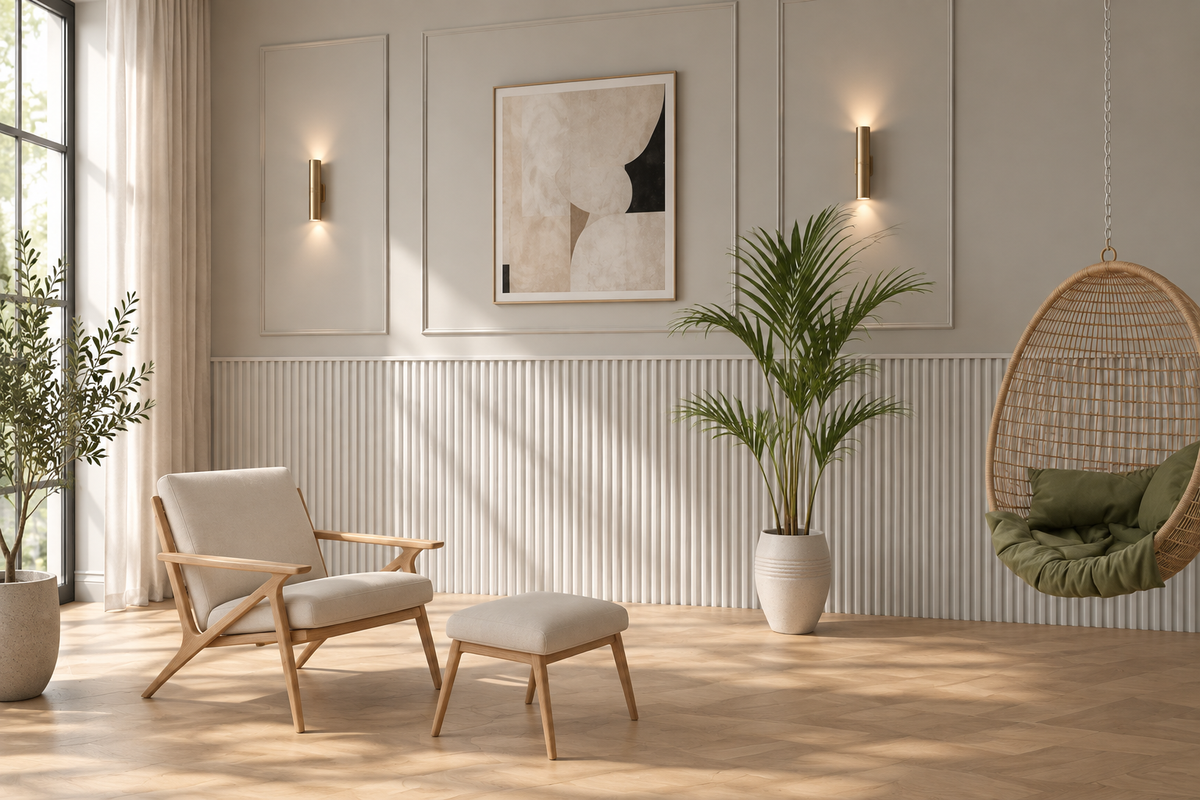
- Neutral base as a unifying element: Uniform floors, walls, and subdued moldings provide an aesthetic backdrop for more distinctive furnishings.
- No rigid patterns: The ability to fully adapt the interior to the individual needs of the residents without losing functionality and elegance.
Key principles of combining textures without visual chaos
Creating a successful eclectic composition requires following basic architectural rules:
- Uniform color palette: Basing the design on a cohesive color scheme (e.g., shades of white, gray, or beige) allows for greater freedom in using various textures.
- Dominant accent principle: Choosing one distinctive decorative texture, for which the remaining finishes provide a subdued, muted backdrop.
- Moldings as a compositional unifying element: Skirting boards, wall moldings, and cornices define clear boundaries between zones and organize the space.
- Precise material transitions: The junction of different textures (e.g., plaster and panels) requires the use of matching finishing profiles.
🛒 Recommended products from this category:
Check out our dedicated collection: Wall moldings and decorations and choose the perfect solution for your interior.
Eclectic style in home interior design
Living room – classic elegance and modern textures
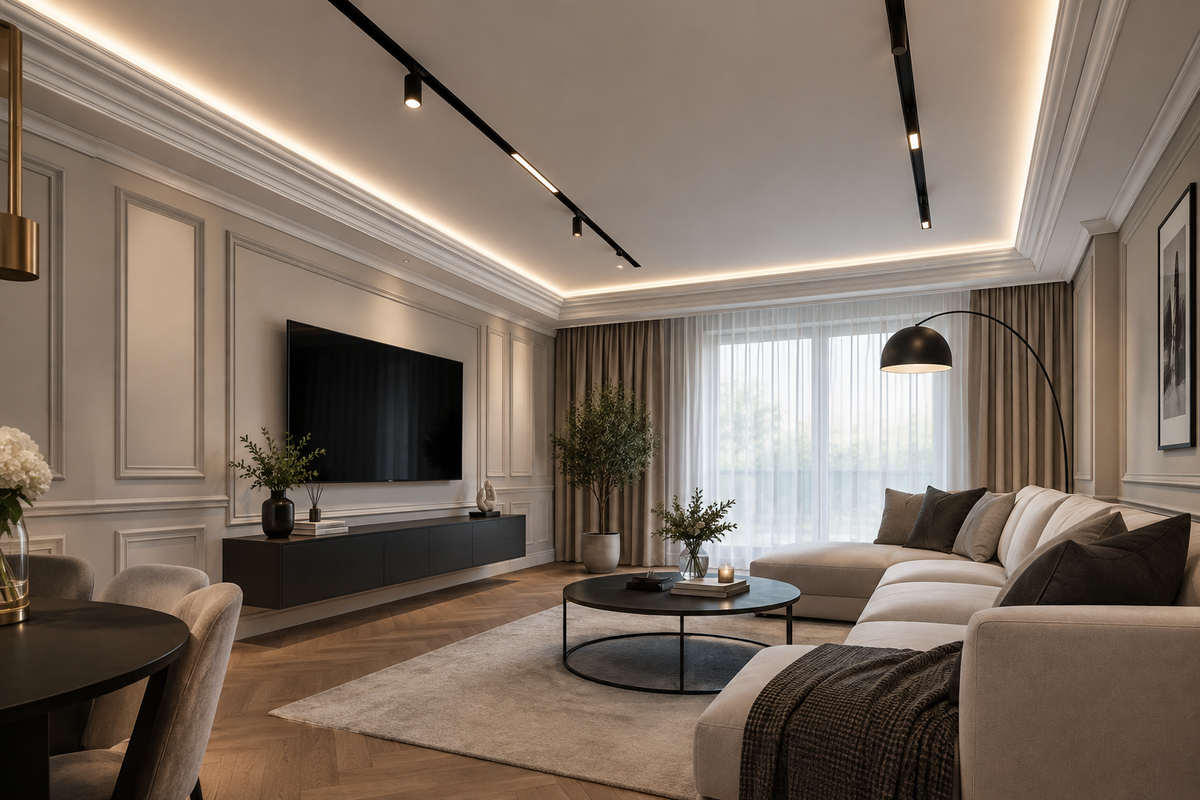
In the living room, eclectic style successfully combines raw plaster or brick with elegant molding frames. A smooth PS wall molding is used to precisely define decorative zones on smooth walls, creating aesthetic frames around paintings or the TV area.
A seamless connection between the wall surface and the ceiling ensures a light composition. A smooth cornice molding visually raises the room and gently completes the entire arrangement.
Bedroom – soft fabrics and spatial 3D panels
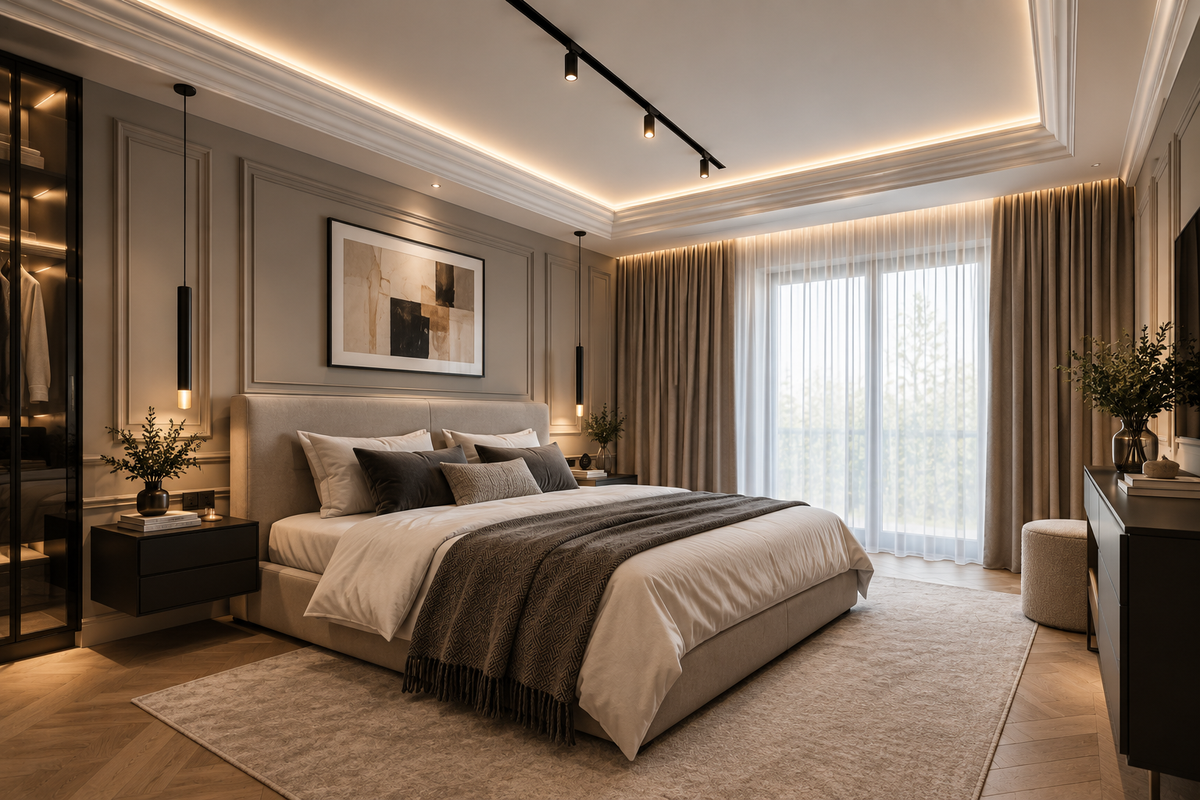
The bedroom requires a combination of textures that promote quietness and relaxation. Pairing an upholstered headboard with a three-dimensional wall texture creates an exceptionally cozy, deep atmosphere.
The wall behind the bed can be distinguished by a vertical rhythm provided by the Thalia 02 wall panel, which also improves the room's acoustics. Clean lines in the window area are guaranteed by a discreet 100x40mm curtain cornice molding, which effectively conceals mounting elements.
💡 Read also:
3D Wall Panels for Painting: How to Prepare and Paint Them with Wall Paint? A Step-by-Step GuideBathroom – moisture resistance and material contrast
An eclectic bathroom relies on combining cool stoneware with warm molding accents. The key criterion for choosing finishing materials remains their absolute resistance to water and moisture.
The lower wall area near the floor is particularly exposed to splashes. This requirement is perfectly met by the waterproof 100x14mm skirting board, which serves as a durable base connecting tiles with the painted surface.

Study – visual harmony and technical precision
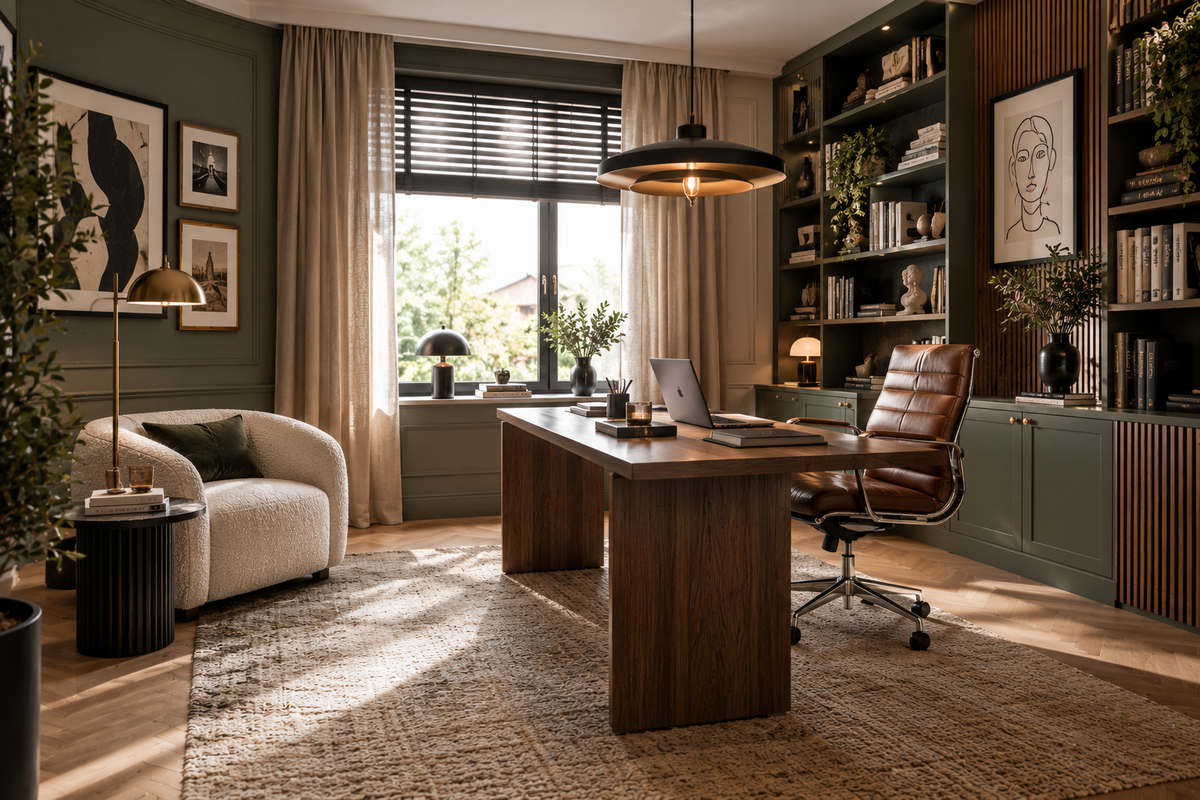
A home office requires a subdued arrangement that promotes concentration. Smooth walls in deep shades pair perfectly with wooden furniture and steel lighting accents.
Precise management of natural light is ensured by a stable track system. The durable Primeline 2 double aluminum curtain track allows for the smooth movement of both delicate sheer curtains and heavy blackout drapes.

Hallway – a representative and durable entrance area
The hallway is the showcase of the home, where eclectic style allows you to create a first, unforgettable impression. The juxtaposition of patterned wallpaper with smooth baseboard molding gives the interior a unique style.
Using durable wall profiles in the lower part prevents dirt and mechanical damage, creating an elegant and highly practical English wainscoting.
Children's room – a safe mix of patterns and functionality
In a children's room, eclectic style allows you to freely combine pastel colors with materials that are easy to keep clean.
Dividing the wall into a lower part (resistant to dirt and stains) and an upper part (decorative with a fairy-tale motif) helps maintain aesthetic order and creates a joyful atmosphere.
Most common mistakes when combining textures in eclecticism
Creating eclectic compositions carries the risk of overloading the interior. To maintain harmony, avoid the following mistakes:
- Using too many dominant textures: Combining concrete, brick, patterned wallpaper, and 3D panels in one room will create visual chaos.
- Lack of a common color denominator: Too much color discrepancy makes individual elements compete with each other instead of creating a cohesive whole.
- Incorrect proportions of molding profiles: Choosing moldings that are too high for low rooms visually overwhelms the entire space.
- Improper material selection for the function: Using profiles susceptible to moisture in rooms with elevated humidity.
Summary – eclectic interior checklist
- Choose one dominant color or texture as the guiding motif of the arrangement.
- Connect walls with floors and ceilings using matching moldings.
- Use durable and waterproof baseboard profiles in areas exposed to impacts and moisture.
- Hide the technical curtain mounting elements using dedicated masking boards.
- Remember the principle of moderation – lightness of composition is the basis of successful eclecticism.
Frequently Asked Questions (FAQ)
Will eclectic style work in small interiors?
Yes, provided you use a light color palette and limit the number of distinctive textures to one decorative accent. Light colors reflect light and visually enlarge the space.
How to choose the color of moldings for varied walls?
The most universal choice is white or painting the moldings the same color as the wall. This creates a subtle, three-dimensional effect without introducing additional color contrast.
What to consider when choosing baseboard moldings for 3D panels?
Choose smooth, matte profiles with a simple shape that will not compete with the elaborate and dynamic structure of the wall panels.
Which profiles best conceal window tracks?
Dedicated molding curtain cornices work best, as they completely cover aluminum tracks and create an aesthetic, seamless finish for the wall.
Where to buy proven elements for finishing eclectic interiors?
The Cezar store offers a wide range of matching components, where you will find durable skirting boards, decorative wall panels, and modern wall moldings, allowing you to effortlessly combine different textures into a cohesive whole.
Share:
Modern Classic – How to Combine Ceiling Mouldings with LED Lighting: A Step-by-Step Guide
Why choose polystyrene skirting boards? Discover 3 main benefits