⏱️ Reading time: 6 min
Wainscoting can be made of wood, wood-based materials, or plastics, and each of these options gives the walls a new character. Contemporary wainscoting is returning in modern forms and is increasingly appearing not only in private homes, but also in residential developments, hotels, and offices. Below you will find a comparison of materials, specific prices, selection and installation guidelines, and information on how Cezar strips and profiles complete the entire cladding composition.

What is wainscoting and when is it worth using it
The word "wainscoting" derives from the French "boiserie", which means decoratively finished wooden panels on walls and ceilings. Originally, they protected the cold, masonry walls of medieval palaces; today, their role combines aesthetics with a protective function. Wainscoting serves an aesthetic and protective function, and wooden wainscoting, MDF panels, or PVC cladding can be used in any room: from the living room and bedroom to the hallway, kitchen, and bathroom.
The basic styles are classic wainscoting (full cladding made of solid wood), English wainscoting (paneling on the lower part of the wall), and modern wainscoting in the form of vertical slats and 3D panels. Wainscoting protects plaster from mechanical damage, which is particularly important in the hallway, on staircases, and in areas with bicycle or stroller traffic.
From the perspective of the Cezar brand, the finish looks complete only when the cladding is matched to the skirting board and decorative profiles. Without these details, even the best wainscoting loses its cohesion.
Benefits of using wainscoting:
-
protection of the lower part of the walls against dirt and impacts from chairs, strollers, and furniture
-
improved room acoustics; wood and MDF absorb sounds better than smooth plaster
-
masking plaster irregularities and installations
-
creating a visual rhythm on the wall; the optical division adds elegance and luxury
-
possibility of renovation (sanding, painting, varnishing) without replacing the entire surface

🛒 Recommended products from this category:
Check out our dedicated collection: Wall panels and choose the perfect solution for your interior.
Wooden wainscoting – a traditional solution made from natural material
Classic wooden wainscoting consists of tongue-and-groove profiled boards, most often made of pine, spruce, oak, or ash. In premium projects, exotic woods are used: teak and American walnut. Each board should be kiln-dried to a moisture content of 8–12% to limit warping after drying. Wooden wainscoting is characterized by an elegant and natural appearance, and with proper maintenance, its durability can reach 30–50 years. Pine boards cost from PLN 25/m² to PLN 120/m²; spruce is in a similar range, and Siberian larch starts at around PLN 220/m².
-
The natural grain pattern makes each board unique; the wood texture improves the aesthetics and sensory perception of interiors.
-
Wood regulates humidity; it absorbs excess moisture and releases it when the air is dry, which improves the microclimate.
-
Wooden wainscoting is durable and resistant to damage, and after a dozen or so years, it simply needs to be sanded and repainted or restained.
-
The material requires treatment with oil or varnish; without protection, it reacts to moisture by swelling and cracking.
-
Installation on a frame provides ventilation, but increases costs and installation time; the width and thickness of the boards must be matched to the depth of the frame.
Applications: attic walls and ceilings, rustic and Scandinavian interiors, themed restaurants, saunas (aspen, alder; these species do not heat up and do not release resins). Cezar skirting boards and quarter rounds in wood color allow for a clean finish of the wainscoting at the floor, maintaining cohesion with the cladding material.
Modern wainscoting – wall panels, slats, and decorative profiles
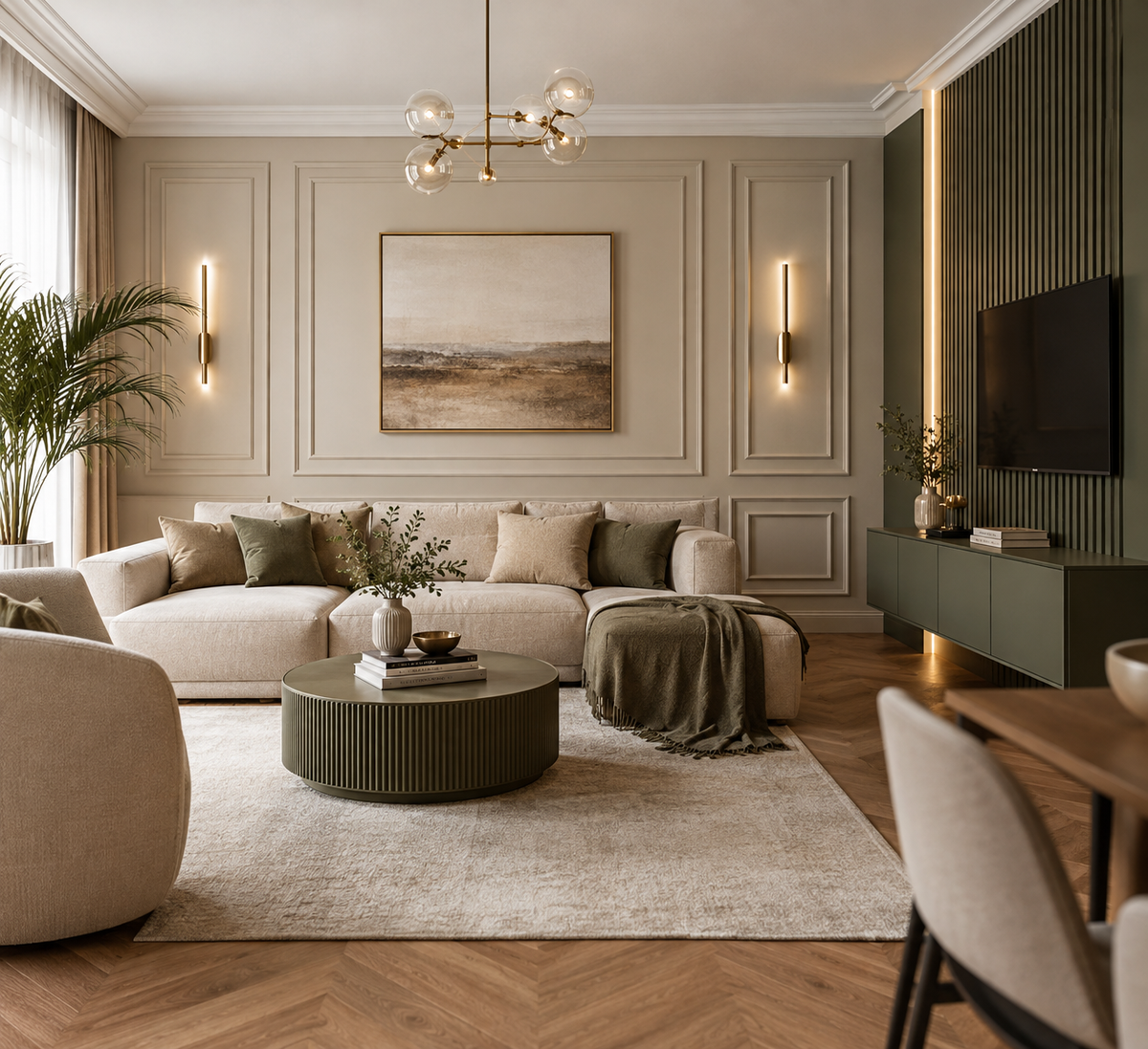
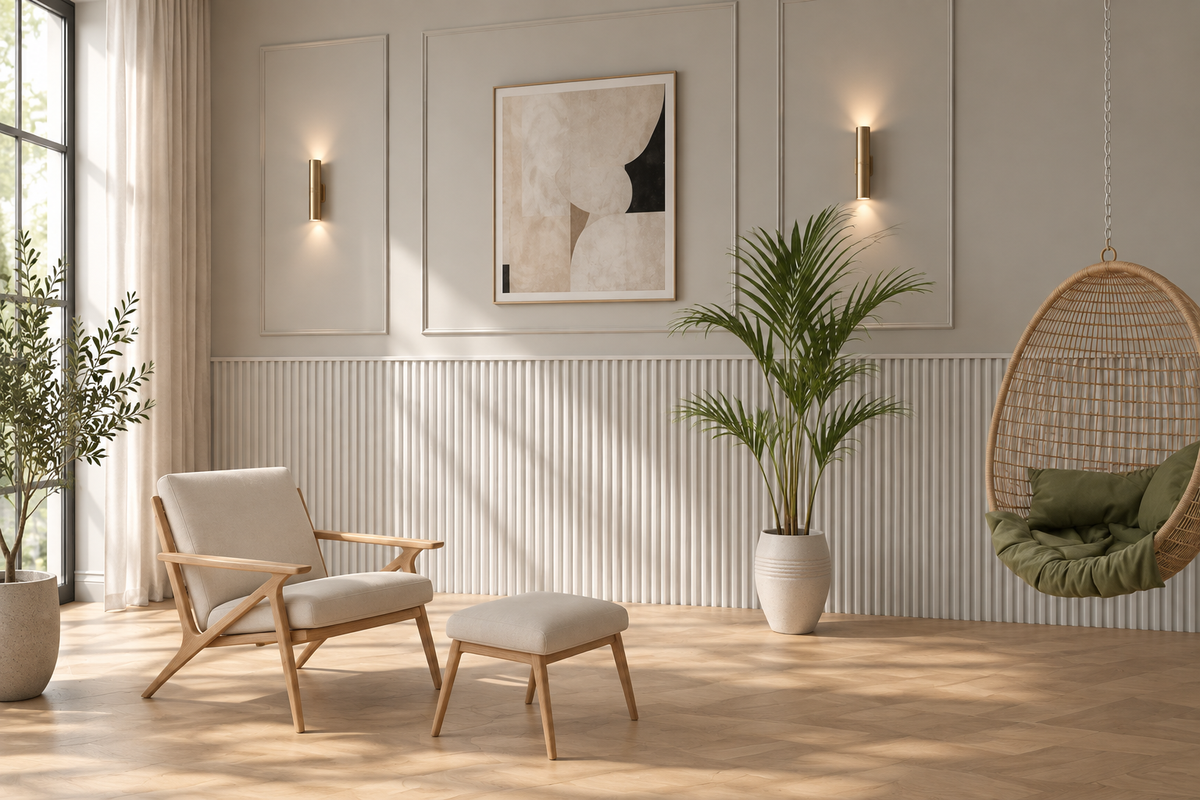
Modern wainscoting consists of wall panels made of MDF, PVC, XPS, or polymer plastics, as well as thin vertical slats and profiles that create geometric frames on the walls. It does not cover the entire room. Increasingly, it covers only a section: the area behind the TV, the headboard in the bedroom, or a protective band in the hallway.

Color and material trends for 2026 include slats in light oak and walnut colors, matte black aluminum profiles, 3D panels with geometric reliefs, and wainscoting in RAL colors: warm whites, grays, bottle green, and navy blue. PVC wainscoting is available in many colors and patterns, allowing it to be matched even to non-standard arrangements.
Cezar products (skirting boards, molding and wall decorations, decorative panels) allow you to create modern wainscoting without a heavy wooden structure. The panels are installed with glue or clips, and aluminum profiles complete the finishing details.

Examples of solutions:
-
A section of the TV wall finished with slats in contrast with the accent color of the living room
-
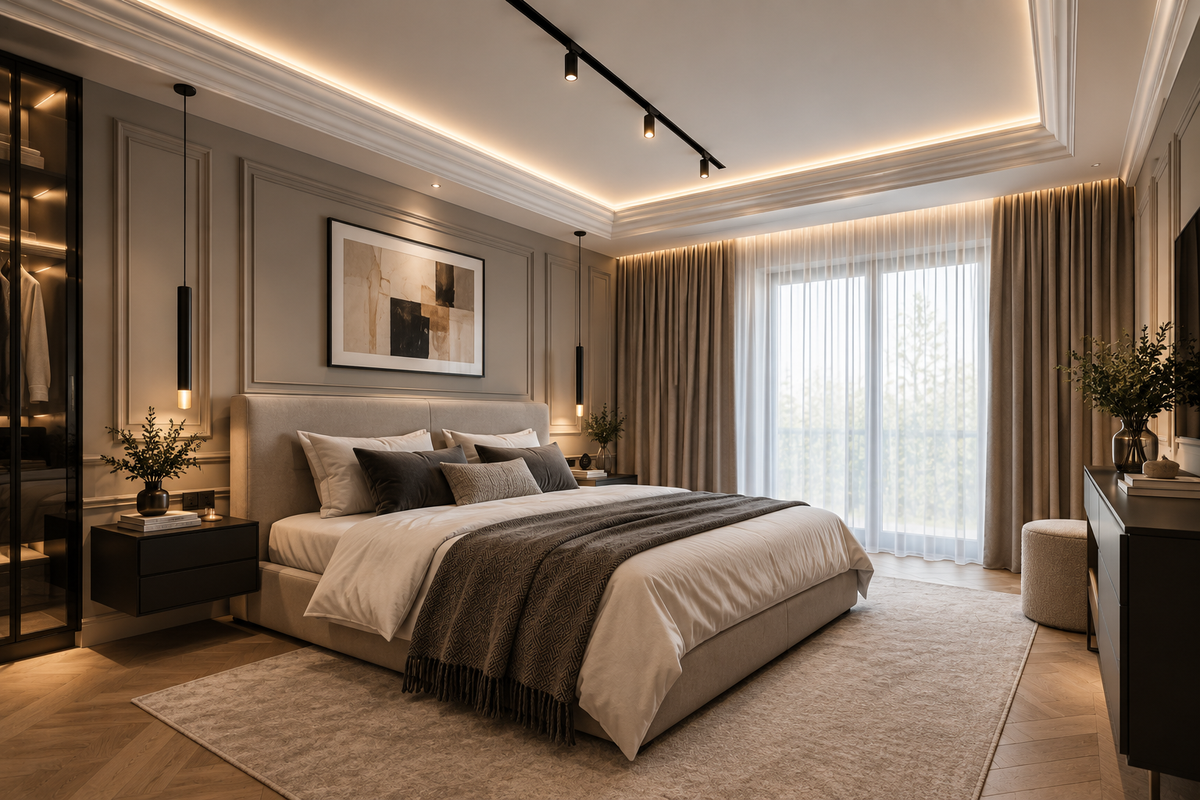
A headboard made of 3D panels, often with built-in LED lighting along the top edge
-
A protective band in the hallway (30–40 cm from the bottom of the wall) made of PVC wainscoting, protecting the surface from dirt from shoes and suitcases
MDF wainscoting – versatile panels for residential and commercial interiors
MDF wainscoting is a board made of wood fibers and synthetic binders, routed or covered with decorative film. MDF wainscoting is moisture-resistant and easy to clean; in the laminated version, it is suitable for rooms with moderate humidity. Standard MDF swells upon direct contact with water, so it is not suitable for a shower enclosure without additional protection.
-
MDF has greater dimensional stability than solid wood; after installation, the material reacts less to temperature changes.
-
Its smooth surface (without knots and natural imperfections) makes it ideal for varnishing and painting in any color.
-
MDF wainscoting is moisture- and scratch-resistant to a degree that allows it to be used in the hallway, on the staircase, in the dining room, or in a hotel reception.
-
MDF construction costs around PLN 70–120/m², making it a cheaper alternative to solid wood.
-
A damaged panel usually needs to be replaced; MDF is harder to renovate by sanding than wood.
MDF skirting boards and decorative profiles from Cezar can be color-matched to MDF wainscoting; painted in the same shade, they create a cohesive finish from the floor to the top trim.

English wainscoting – classic paneling in a modern version
English wainscoting, also known as wainscot, is a decorative band on the lower part of the wall. English wainscoting usually covers the lower part of the wall to a height of 90–110 cm; in rooms with 3–4 m ceilings, the height of the wainscot can reach 150–200 cm. English wainscoting panels measure 200 × 12 × 1.2 cm, making it easier to plan the number of elements needed.
The price of English wainscoting starts at PLN 150 per set; Premium English wainscoting costs from PLN 185 per set. Installing English wainscoting does not require a frame or drilling; the panels are glued directly to the wall.
-
English wainscoting protects the plaster from mechanical damage caused by chairs, strollers, and bicycles.
-
English wainscoting masks surface irregularities, eliminating the need for filling.
-
It introduces an optical division of the wall, giving the interior a modern classic character and adding elegance even to a simple hallway.
Cezar skirting boards and tall wall strips can serve as the base for an English wainscoting system: the bottom strip, vertical profiles (stiles), and top trim create a complete frame. Classic English wainscoting is most often available in white or cream, although you can increasingly choose colored versions: sage, navy blue, graphite.
Applications: hallways in multi-family and residential developments, hotels and restaurants, private staircases, modern classic style living rooms.

Material selection – wooden wainscoting, MDF, PVC, and moisture-resistant plastics
The choice of material depends on the room, budget, and expected durability. Solid wood combines a natural appearance with the possibility of multiple renovations, but its price and sensitivity to moisture limit it to dry rooms. MDF offers a smooth surface and stability at a price of PLN 70–120/m², but standard versions do not withstand constant contact with water. PVC (PLN 45–80/m²) is fully waterproof and lightweight. XPS and polymer plastic profiles provide moisture and deformation resistance at a low weight. It is also worth mentioning that cork wainscoting has sound-insulating properties and stabilizes the temperature, which works well in a bedroom and study.
Recommendations for individual rooms:
-
Living room and bedroom: solid wood or MDF; both add character to the room and allow for a later color change
-
Hallway and staircase: MDF or PVC; with intensive use, PVC withstands impacts and dirt better
-
Kitchen and bathrooms: PVC or polymer panels; moisture resistance is a priority here
-
Public buildings: high-quality aluminum and PVC profiles, resistant to intensive use
In our Cezar offer, you will find PVC and MDF skirting boards, glazing profiles, and aluminum strips that make it easier to match the transitions between the cladding and the floor or tiles.
Design and arrangement – classic wainscoting vs. modern interior finishing
Classic wainscoting consists of full cladding made of warm wood, routed boards, and rich ornaments. Modern wainscoting focuses on simple divisions, slats, geometric frames, and solid colors. Both forms require consideration of proportions: the height of the wainscot should correspond to the height of the room, and the width of the strips and the frequency of the panel divisions must match the width of the wall and the size of the furniture.
Wainscoting can overwhelm a room if there is too much of it. With 250 cm ceilings, a wainscot higher than 100 cm already visually lowers the interior. On the other hand, the vertical lines of wainscoting can visually raise a low room, which makes vertical slats a good solution for apartment living.
Examples of combinations:
-
Modern wainscoting with vertical slats + minimalist skirting boards, without rich molding
-
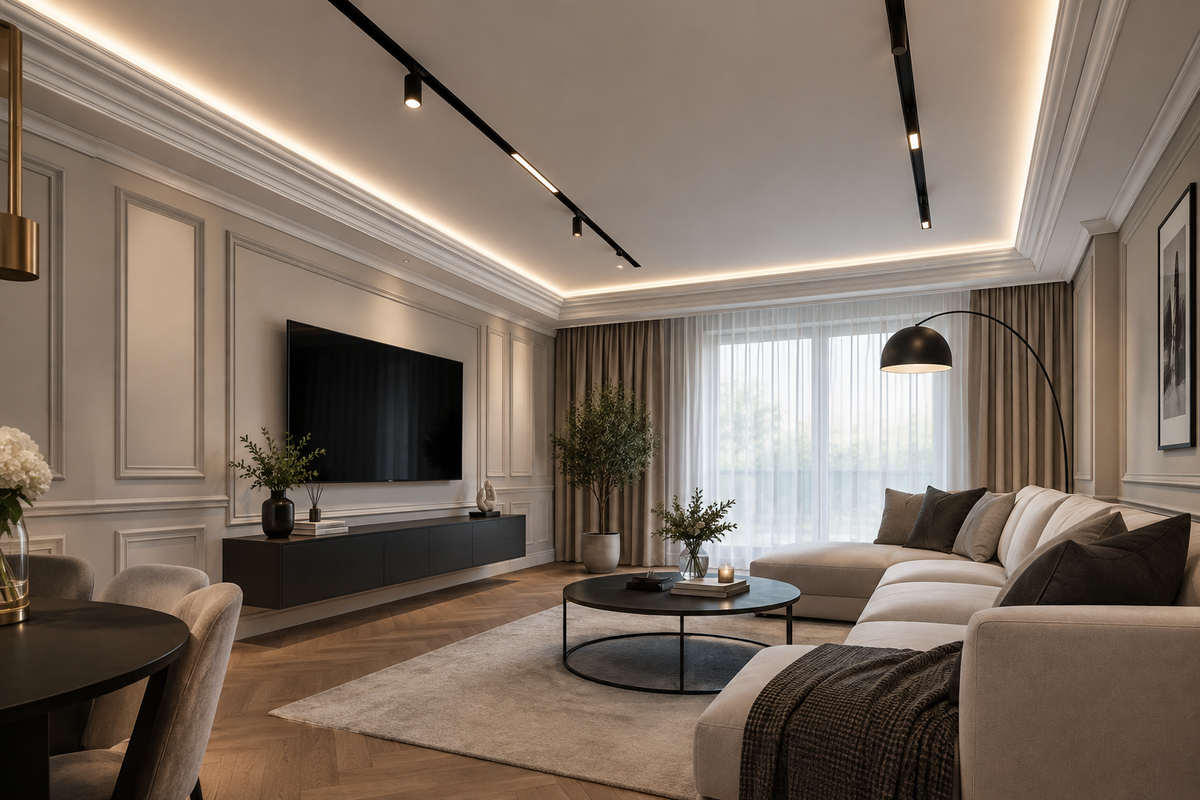
Classic wooden wainscoting + decorative ceiling molding, which creates the composition of the interior's proportions
-
Architects combine wainscoting with LED installations; Cezar aluminum profiles for LED strips serve as a lighting carrier in the upper ends of the cladding and cutouts, creating a light framing effect
Wainscoting installation and finishing with Cezar details
Wainscoting installation can be time-consuming and expensive. Wainscoting installation costs an average of PLN 115/m², and the total cost of installing wainscoting (material + labor) is PLN 200–350/m². Wainscoting installation requires a level, dry substrate; irregularities exceeding 3 mm per linear meter must be leveled beforehand.
General steps:
-
Substrate preparation: leveling, priming, marking the horizontal and vertical reference lines
-
Wooden wainscoting: installation of the frame with a ventilation gap, fastening the boards with screws; the frame allows later access to the installations
-
MDF wainscoting and PVC panels: installed directly to the wall with mounting glue; dowels are only auxiliary. Wainscoting is glued using mounting glue.
-
Maintain the expansion joint at the floor, masking it with a skirting board; this protects against thermal stresses
-
Corners and ends: glazing profiles, countertop strips, and PVC or aluminum corners complete the edges of the cladding
Aluminum profiles from the Cezar offer prove themselves as edge finishes for tiles, steps, or joints of different materials on the wall; their use is accompanied by precise matching to the thickness of the panels.
Maintenance, renovation, and durability of wainscoting
Wood panel maintenance boils down to a few simple tasks: vacuuming with a soft cloth, washing with a damp sponge and a mild detergent (pH neutral), and drying immediately after contact with water. On lacquered surfaces, avoid harsh chemicals.
-
Wooden paneling: it can be restored by sanding and re-lacquering or repainting, which extends its lifespan to 30–50 years.
-
MDF paneling: restoration is limited to repainting or replacing damaged panels; durability in dry conditions is 15–25 years.
-
PVC panels: they do not require impregnation; durability is 15–20 years, especially in wet areas.
-
Cezar skirting boards and mouldings allow you to refresh the area near the floor during renovation without dismantling all the paneling; replacing only the skirting board takes a few minutes per linear meter.
In heavily used spaces (corridors, stairwells, public buildings), it is worth using PVC panels, XPS, and polymer profiles resistant to mechanical damage and moisture.
Wood paneling in B2B projects – developers, contractors, and wholesalers
In development projects, paneling appears in the common areas of buildings: lobbies, stairwell corridors, club rooms, and receptions. English wood paneling made of MDF or PVC in a solid color enhances the perceived quality of the investment within a controlled budget.
Benefits for developers and contracting companies:
-
Standardization of details: repeatable skirting boards and profiles shorten installation time and lower the cost per linear meter for large orders
-
Ready-made Cezar systems (skirting boards, aluminum profiles, mouldings) eliminate the need to design every detail from scratch
-
System integration: MDF or PVC paneling + tile profiles + LED skirting boards in aluminum profiles create cohesive and durable interior design details
Cezar offers design support, logistics for large deliveries, and constant product availability, which facilitates the execution of orders covering dozens of apartments or entire commercial buildings. How to choose the ideal wall panels for a specific project can be found in a dedicated guide. Material resistance, availability in Poland, and offer flexibility allow interior designers and contractors to choose a solution that fits both the budget and the expected aesthetics of the building.
Share:
Thin Cezar skirting boards – a practical guide to choosing, materials, and installation
#16 Wood in interiors without secrets. Episode partner JAWOR PARKIET x AKADEMIA CEZAR