
⏱️ Reading time: 5 min
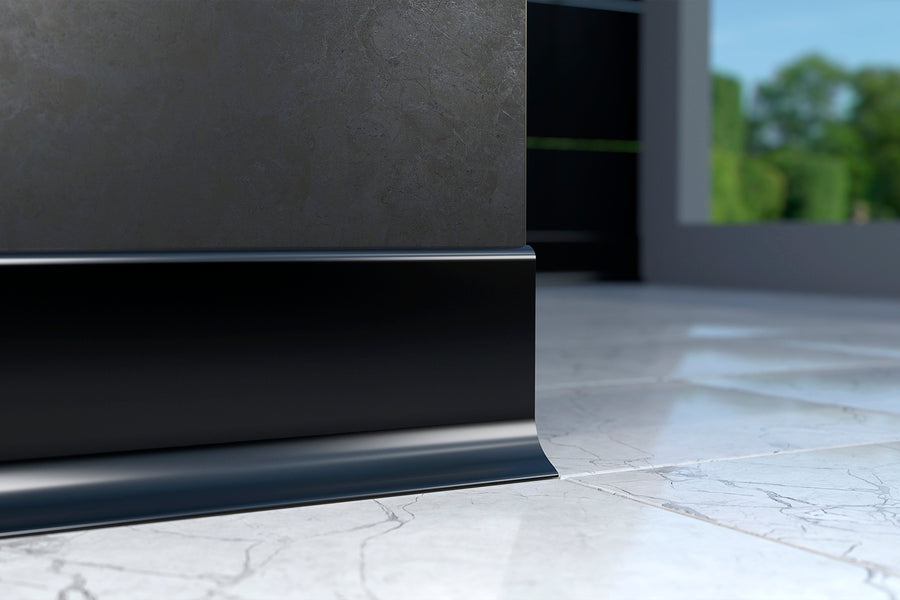
Every detail matters when finishing a floor. Thin skirting boards with a small thickness are gaining popularity in apartments, offices, and commercial properties because they combine functionality with space-saving. This guide explains what thin profiles are, what materials we make them from, and how to choose and install them.
Thin skirting boards – what are they and when to choose them?
Thin floor boards (also known as thin floor skirting boards) are profiles with minimal thickness, i.e., projection from the wall. Thin skirting boards have a minimum thickness of 4–12 mm, and Cezar models start at a width of 4 mm. Thickness is not the same as height; a profile 10 mm thick and 80 mm high is still a thin board.
Their application covers three basic functions: the board conceals expansion gaps between the floor and the wall, protects the lower part of the walls from damage, and creates an aesthetic finish, closing the floor line. Thin skirting boards protect the lower parts of the walls from damage, although they provide less wall coverage compared to solid profiles.
When are thin boards the best choice? Here are typical situations:
-
An apartment in a block with a narrow corridor: a thicker profile takes up centimeters at passages and doors. Ultra-thin boards minimize the space required for installing furniture close to the wall.
-
Kitchen cabinets installed "flush to the wall": cabinet fronts rest against the plaster, and a thin board does not block them from opening.
-
Built-in wardrobes with flush doors: sliding doors require a free edge at the wall; a thin profile does not interfere with the tracks.
-
Threshold-free doors and concealed door frames: the minimum board thickness eliminates the problem of closing the door leaf.
-
In modern interiors with a minimalist character, a low-profile board is an ideal solution because it does not dominate visually.

A thin board does not have to be low – dimensions and proportions
The board's dimensions are two independent parameters. The thickness (projection from the wall) of thin profiles is 8–12 mm. Height is the dimension from the floor upwards. For example: Cezar MDF board 60 x 11 mm in white RAL 9003 is only 11 mm thick, but 60 mm high. Thin skirting boards usually have a height of 4 to 7 cm, although in the Cezar offer you will also find tall skirting boards with a slim profile and a height of up to 100 mm.
How to choose the proportions?
-
Rooms with low ceilings (2.5–2.7 m) and small floor area: boards 40–50 mm high.
-
Apartments and tenement buildings with ceilings 3.0–3.5 m: boards 70–100 mm. The Future Slim model with a cross-section of 8 x 15 mm (in a thickness-to-height ratio of 80 mm) shows that a thin profile can also be tall.
-
The width of the door casing should be proportional to the height of the board; with a narrow 50 mm casing, a 100 mm board looks disproportionate.
Before purchasing, it is worth measuring the actual expansion gap. For laminate panels, it is usually 8–10 mm, for LVT/SPC vinyl floors 5–10 mm, and for wooden floors 10–15 mm. If the gap is 10 mm, an 8 mm thick profile will not fully cover it.
🛒 Recommended products from this category:
Check out our dedicated collection: Skirting boards for panels and tiles and choose the perfect solution for your interior.
Materials for thin skirting boards – from MDF to aluminum boards
The choice of material determines moisture resistance, paintability, mechanical durability, and the installation method. Cezar produces skirting boards made of PVC, MDF, XPS (extruded polystyrene), aluminum, and steel. Their versatility allows you to choose a profile for any room. On the market, you will also find MDF skirting boards from other brands, but from the perspective of the Cezar manufacturer, we offer a wide selection of models based on proven technologies.
Individual materials differ in their properties:
-
MDF skirting boards: smooth, uniform surface suitable for painting with water-based paints. Good for living rooms and bedrooms, available in matte white and wood decors. They require protection from prolonged contact with water. You can find a detailed comparison in the article MDF or PVC – skirting board comparison.
-
PVC boards: PVC boards are moisture-resistant and easy to clean, making them a solution for kitchens, bathrooms, and hallways. Cezar PVC models have a cable channel and are less prone to swelling than MDF.
-
Aluminum and stainless steel boards: thin aluminum boards have high resistance to mechanical damage. Profiles made of aluminum or steel are suitable for offices, corridors, and commercial premises. You can find the full range of Cezar aluminum boards in the dedicated collection.
-
XPS / HDPS / extruded polymers: lightweight models with good moisture resistance. They are suitable for painting and provide additional profile insulation.
Wooden boards (or profiles with a wood decor) bring naturalness and warmth to the interior, especially when combined with wooden flooring.
The material also affects installation: MDF is glued, PVC and XPS are glued or clipped, and aluminum is clipped or screwed with anchors.

Advantages of thin skirting boards in modern interiors
Design trends for 2024–2026 focus on clean lines, large glazing, and vinyl or large-format tile floors. Thin skirting boards are ideal for minimalist and modern interiors because they do not disrupt these proportions. Thin skirting boards fit well with Scandinavian styles and minimalist interiors, as well as loft spaces with raw concrete.
Aesthetic benefits in modern interiors:
-
Thin skirting boards create clean lines separating the floor from the wall, ensuring an aesthetic transition between surfaces. The profile does not draw attention away from the other elements of the decor.
-
White skirting boards minimize the visual closing of space in small rooms; thin skirting boards visually enlarge the space in small apartments.
-
Thin skirting boards are available in many colors. White skirting boards are the most frequently chosen; popular shades of white are RAL 9003, RAL 9010, and RAL 9016. Cezar has gathered the collection of white PVC and MDF boards and black boards in separate categories.
-
Boards in wood colors warm up the interior and create a harmonious whole with natural flooring. Aluminum profiles complement concrete and modern finishes well.
-
Thin skirting boards offer new design possibilities; their aesthetic appearance and slim detail work well in most interiors.
-
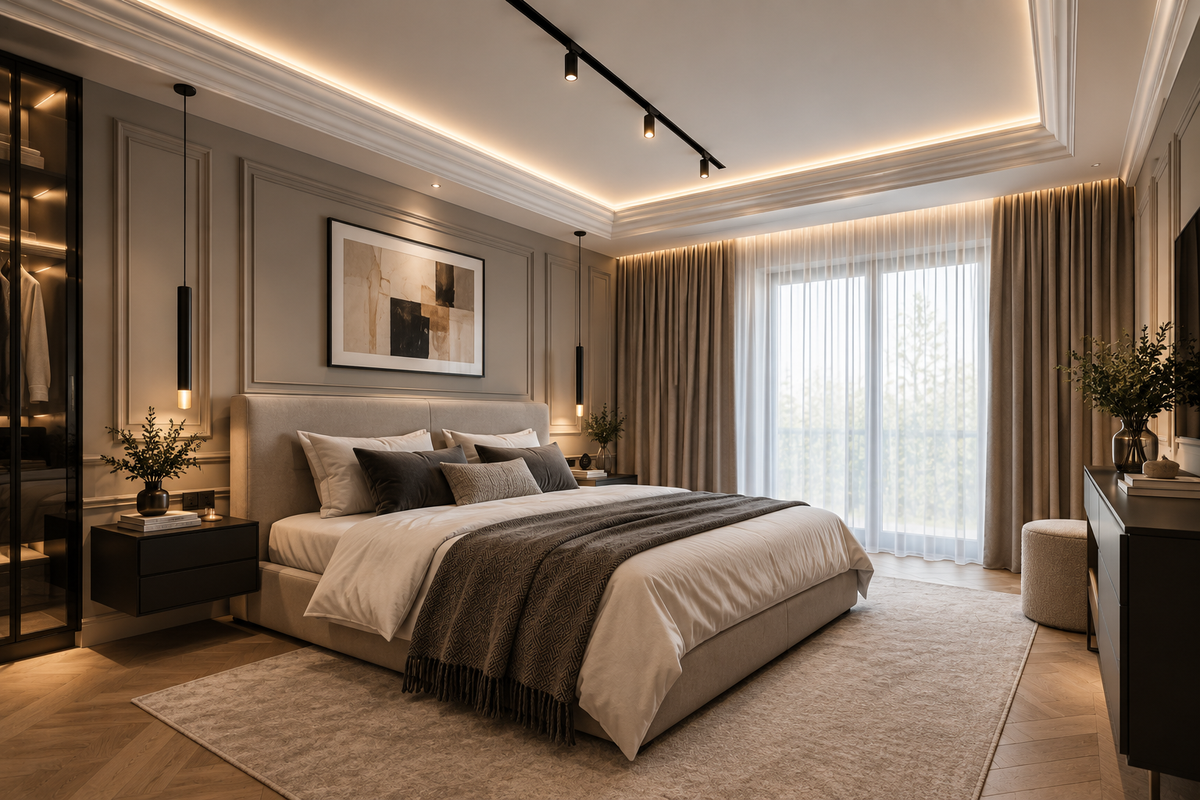
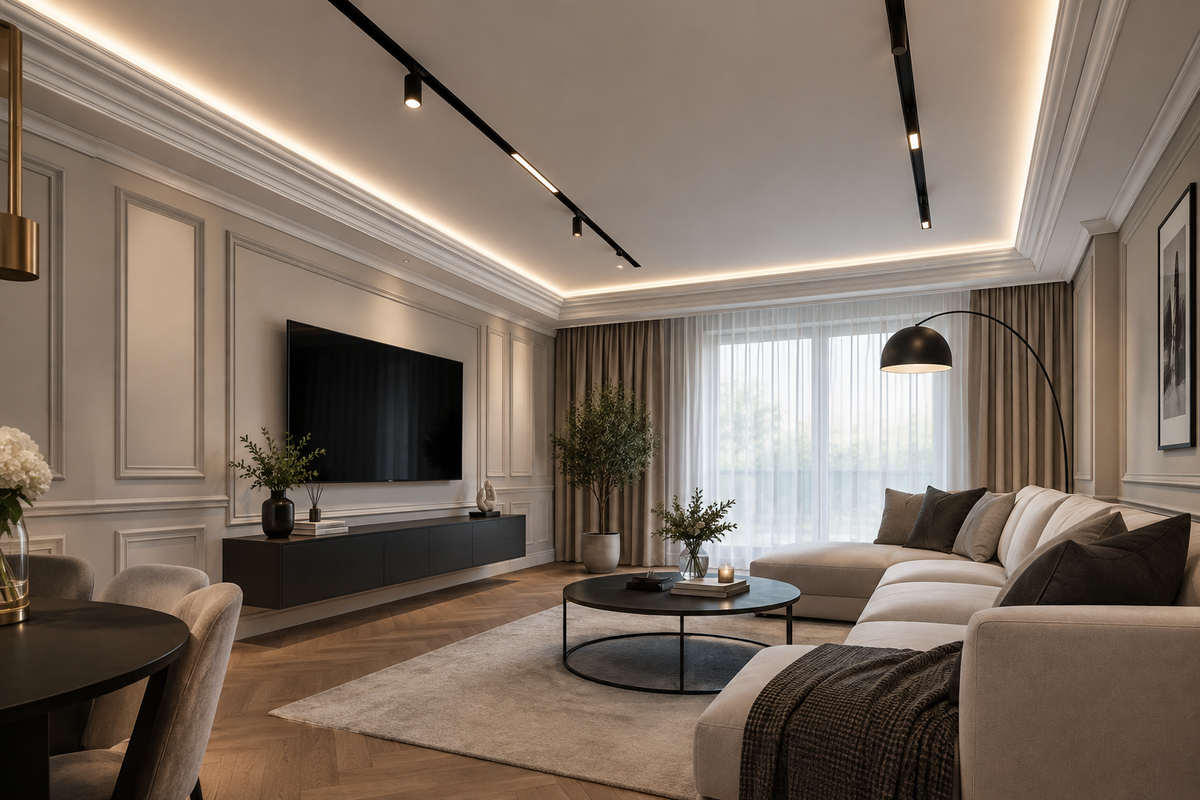
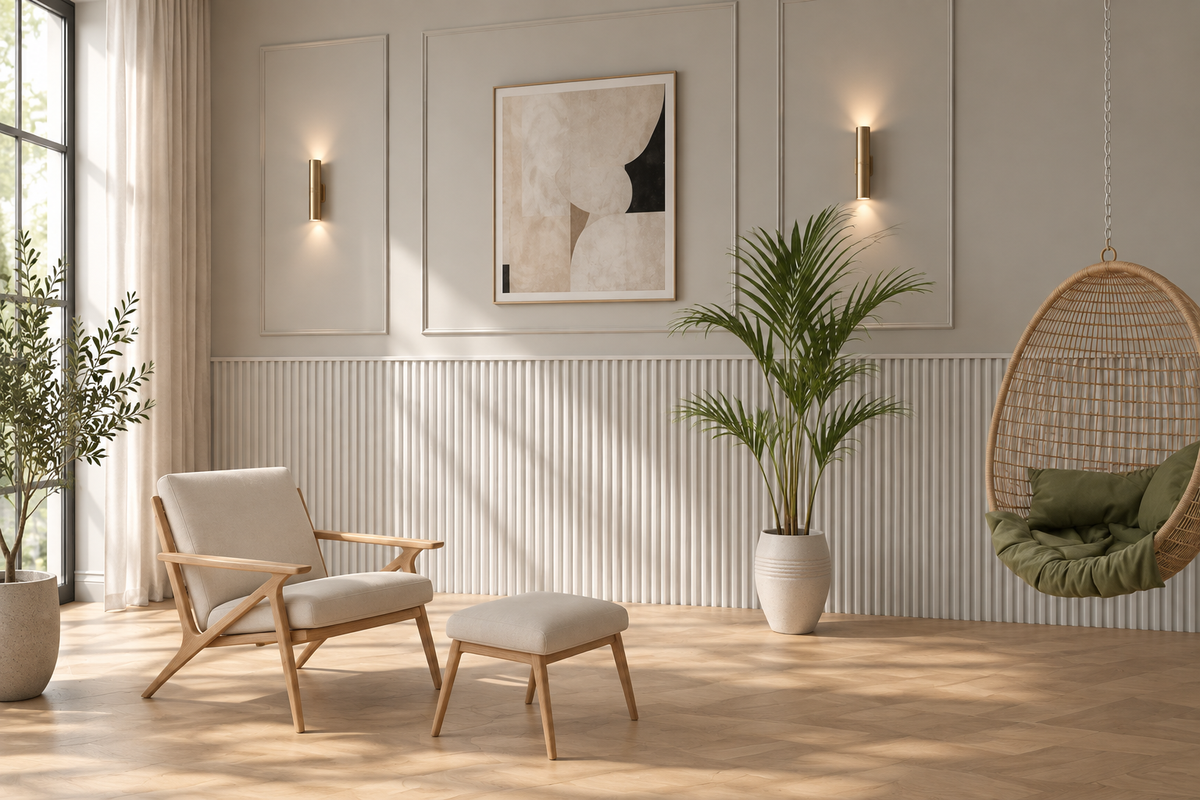
Thin floor skirting boards allow you to showcase other interior design details: ceiling moldings, 3D wall panels, decorative profiles. A smaller floor profile does not compete with upper details. Floor boards with such a profile are an ideal choice when the wall is decorated with decorative moldings or LED lighting.
Thin boards complement frameless doors, concealed door frames, and LED systems well. Thin skirting boards fit well with modern interiors regardless of the type of floor.

How to choose a thin skirting board for the floor, doors, and walls?
When choosing thin skirting boards, you combine a technical decision (covering the expansion gap, matching the substrate) with an aesthetic one (color, profile, proportions of your interior). Matching the boards to the surroundings requires several steps.
Selection criteria:
-
Type of floor made of a given material: laminate panels require an 8–10 mm gap, LVT/SPC vinyl floors 5–10 mm, wooden floorboards 10–15 mm, and stoneware and ceramic tiles 3–5 mm. The profile thickness must cover this gap. Cezar boards for panels and tiles take these parameters into account.
-
Color: a board in the color of the wall (e.g., white RAL 9003) visually "disappears". Boards in the color of the floor create a cohesive whole with natural materials. Contrast (black, graphite, brushed aluminum) adds character. Thin boards can be painted any color with paint from a mixing station. Cezar offers a wide selection of options, including wood decors (oak, ash) and RAL colors.
-
Door style and casings: the width of door casings should be proportional to the height of the board to easily match the proportions. With frameless doors, slim profiles look better.
-
Intensity of room use: hallways and offices require profiles with greater resistance (aluminum, thicker PVC); in living rooms and bedrooms, MDF or XPS, available at an attractive price, will work well.
You can consult the Cezar technical advice department about matching; more rules are described in the guide how to choose skirting boards. Before visiting the store, make a list: expansion gap width, floor thickness, wall height, installation type.
Installing thin skirting boards – practical tips
The installation method depends on the type of board and the condition of the substrate (gypsum plaster, concrete, gypsum board). This is especially important with thin profiles, which more clearly "catch" wall irregularities. Before installation, check the flatness of the walls with a spirit level.
Most popular methods:
-
Gluing: modern installation of thin boards is done with glue directly to the wall. Installing thin skirting boards requires the appropriate glue, e.g., a mounting polymer. Advantages: no drilling, quick execution. Cezar offers a dedicated FIX@Press system for installation without specialized tools.
-
Clips and brackets: thin boards can be installed using clips or mounting tape. Cezar mounting clips allow for removal and reinstallation without damaging the wall.
-
Screws with anchors: suitable for older walls and commercial spaces where boards are exposed to mechanical damage.
Installation of thin boards requires precise matching to dimensions. Thin skirting boards require precise cutting of panels during installation; cut corner edges at a 45° angle with a guide saw (for aluminum, metal cutting tools are needed). Degrease and dry the wall surface. Use original Cezar accessories for corners, end caps, and connectors.
Thin skirting boards and additional functions: cables, LED, wall protection
Contemporary skirting boards combine aesthetics with functionality. The floor profile increasingly organizes installations and illuminates interiors.
-
Cable channel: selected PVC and aluminum models conceal unsightly RTV, LAN, and power cables with a diameter of up to 5–7 mm. For thicker bundles, it is better to choose a thicker profile or a dedicated channel.
-
LED lighting: Cezar LED skirting boards, including aluminum profiles with diffusers, allow for discreet lighting of hallways, hotels, and offices.
-
Wall protection: in lobbies, stairwells, and corridors where walls are more exposed to impacts, a thin 59 mm aluminum board will perform better than MDF.
Different materials can be combined in one project: a thin MDF board in the living room with an aluminum LED profile in the hallway. Thin skirting boards can be made of different materials, which gives designers the space to treat them as an element of the finishing system, not just an accessory. Every detail in combination with a well-chosen board builds a harmonious arrangement of the entire interior.

Innovative Future Slim skirting board – a new dimension of thinness and functionality
Future Slim is Cezar's latest offering in the thin skirting board category, combining an ultra-thin profile with high functionality and modern design. It features an exceptionally slim cross-section measuring 80 x 15 mm, making it one of the thinnest and tallest boards on the market. This unique proportion allows for a subtle floor finish that is both durable and aesthetic.
Advantages of Future Slim:
-
Ultra-thin design: a triangular shape that is only 4 mm thick at the top, ideal for saving space and creating a minimalist look.
-
80 mm height: provides an elegant finish and effectively conceals expansion gaps.
-
Versatility: the skirting board is suitable for various types of flooring, including laminate, wooden boards, and vinyl flooring.
-
Easy installation: compatible with glue-down and clip-in installation systems, allowing for quick and precise fitting.
-
Aesthetics and durability: made from high-quality materials that are resistant to mechanical damage and moisture.
Future Slim fits perfectly into modern interior trends, where lightness of form and functionality are paramount. It creates an almost invisible joint between the floor and the wall, which is particularly valued in minimalist and Scandinavian designs.
For more information and the full range of Future Slim skirting boards, visit: Future Slim – Thin Skirting Boards.
Frequently Asked Questions About Thin Skirting Boards
Below you will find the most frequently asked questions with specific answers based on product specifications and installation practices.
-
What does "thin skirting board" mean, and what thickness is considered thin? Thin skirting boards are between 8 mm and approximately 12 mm thick. Profiles thicker than 15–20 mm are considered standard. Thin skirting boards are available from a width of 8 mm.
-
Will thin skirting boards always cover the expansion gap? Only if the profile is as wide as or wider than the gap. With a 10 mm gap and an 8 mm profile, part of the expansion gap will remain visible.
-
Where should MDF be used, and where should aluminium skirting boards be used? MDF is suitable for dry rooms (living rooms, bedrooms) with relative humidity below 60%. PVC: kitchens, bathrooms, hallways. Aluminium: public spaces exposed to moisture and impacts.
-
Can thin skirting boards be painted? Yes. MDF and XPS profiles can be painted with water-based paints after sanding and priming. Factory-lacquered skirting boards should not be repainted.
-
Will a thin skirting board work with kitchen cabinetry? Yes, provided the profile thickness does not interfere with the cabinet fronts. With worktop skirting boards and Cezar kitchen plinths, it is worth checking the clearances before installation.
-
How should thin skirting boards be cleaned? With a soft cloth and mild detergent. Do not soak MDF excessively. Clean aluminium with a non-abrasive metal cleaner.
-
Where can I buy Cezar thin skirting boards? Products are available in our online store and at wholesalers across the EU. Developers, construction companies, and design offices can benefit from working with us
Share:
Jakie listwy przypodłogowe do płytek? Spójny i elegancki efekt we wnętrzu
Wainscoting – classic and modern wall paneling in interior design