
⏱️ Reading time: 3 min
Are you looking for the perfect finish for the wall-to-floor junction, but wondering how a floor skirting board differs from a classic skirting board? Although both elements serve a protective function and conceal expansion gaps, they differ in construction, size, and the visual effect they create in the interior. Discover the key differences and find out which solution best suits your project.

What is a floor skirting board, and what is a traditional skirting board?
The main difference between these elements comes down to their proportions, profile, and how they fit against the wall surface.
- Traditional skirting board: Characterized by a standard height (usually from 4 to 8 cm). It often features milled decorations, profiled edges, or internal channels for cables.
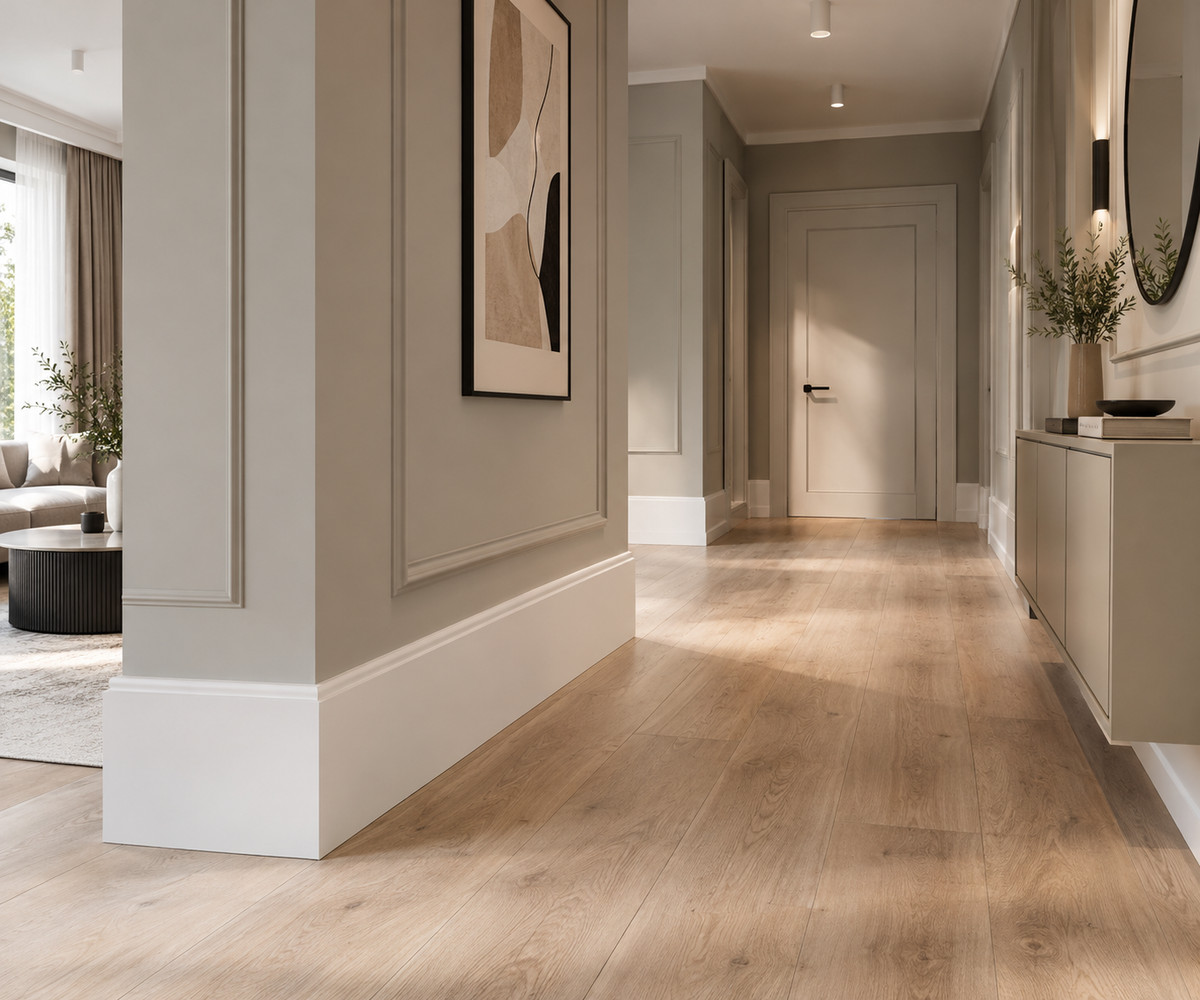
- Floor skirting board: This is a more pronounced, slender profile with a simple, often geometric shape. Skirting boards stand out with a taller vertical surface (often reaching from 10 cm to even 15–20 cm), creating a distinct, elegant lower frame for the wall.
🛒 Recommended products from this category:
Check out our dedicated collection: Tall skirting boards and choose the perfect solution for your interior.
Types of materials – how to choose the right profile for the room?
The choice of material affects durability, resistance to damage, and how the profile holds up in a damp environment.
- MDF skirting boards and skirting boards: They provide a classic aesthetic and look excellent in dry rooms such as living rooms, bedrooms, or studies.
- PVC and polymer profiles: They feature 100% water resistance and high flexibility. This is an ideal solution for kitchens, bathrooms, and hallways where the floor is exposed to moisture and frequent cleaning.
- Aluminum and steel skirting boards: Exceptionally durable, modern accents, most commonly used in loft interiors and offices.
Interior proportions and profile height
Matching the dimensions of the finish to the volume of the room prevents disrupting the overall proportions of the interior:
- Apartments with standard height (up to 2.5 m): Classic skirting boards up to 8 cm or delicate quarter skirting boards will work better, subtly concealing the expansion gap without overwhelming the interior.
- Tall interiors, townhouses, and open spaces: Modern, tall skirting boards and skirting boards with a height of 10–15 cm look great, adding an architectural touch to the interior.
- Color selection: A profile in the color of the wall visually raises the room, while a model in the shade of the floor clearly marks the boundaries of the floor.

💡 Also read:
Modern classic in the living room – how to combine tradition with modernity using finishing detailsMost common mistakes when choosing and installing
To enjoy an aesthetic and durable result for years, avoid these common mistakes:
- Installing moisture-sensitive materials in the bathroom: Using regular MDF in wet areas leads to swelling.
- Blocking the expansion gap: Pressing the profile too tightly against the panels prevents them from naturally moving under the influence of temperature changes.
- Improper scaling: Using a skirting board that is too tall in a very small or low room, which visually reduces its size.
- Using the wrong adhesive: Failing to use a dedicated mounting adhesive suited to the given material (MDF, PVC, polymer).
Summary (Checklist)
Before making a purchase decision, make sure that:
- [ ] You have determined the height of the room and chosen the appropriate scale of the profile.
- [ ] You chose a material suited to the humidity level in the given room.
- [ ] You have considered the color scheme – matching the floor, wall, or door trim.
- [ ] You have prepared the correct mounting adhesive and accessories for precise 45° cutting.
FAQ – Frequently Asked Questions
How does a skirting board differ from a regular floor skirting board?
A skirting board is usually taller, flatter, and has a simple, geometric shape, while a traditional skirting board is lower and often features milled profiling or cable compartments.
Will a floor skirting board hide electrical cables?
Some skirting boards have special grooves on the back of the profile, but if you need to conceal a large bundle of wires, universal skirting boards for panels and tiles with spacious cable channels will work best.

What profiles to choose for a small or low room?
In low interiors, it is best to use lower profiles (up to 6–8 cm) or quarter skirting boards, which do not visually shorten the wall too much.
Can floor skirting boards be installed with adhesive?
Yes, most modern PVC, polymer, and MDF skirting boards and trim are installed directly to the wall using dedicated mounting adhesives.
Where to buy durable and tall floor skirting boards?
You will find a wide selection of floor finishes in various heights and profiles directly in the tall skirting boards category in the Cezar.eu store.
Share:
Wooden slats in interiors – what do they suit and what are modern alternatives for them?
Ceiling and wall mouldings – how to stylishly transform your interior? A step-by-step guide