
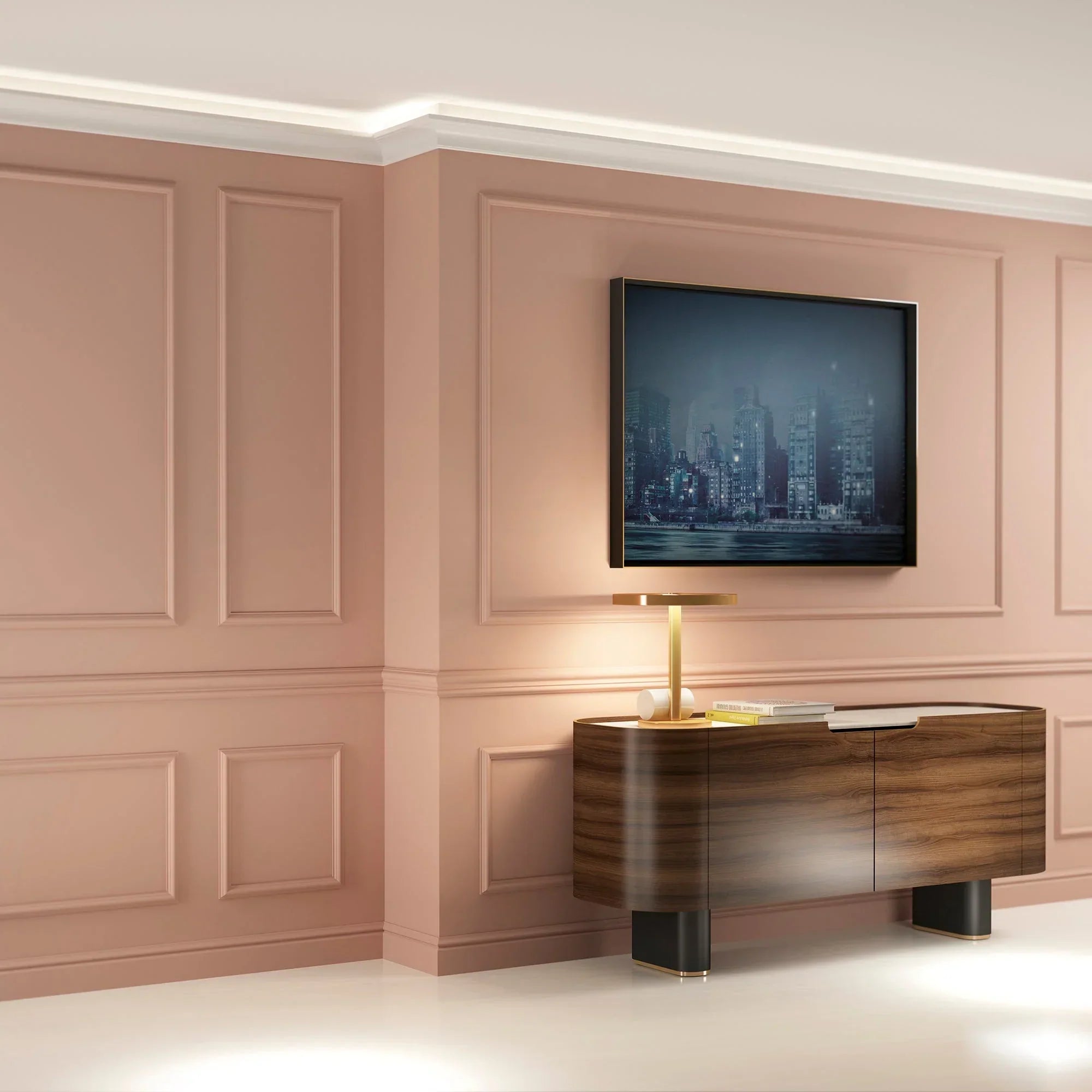
PVC, MDF, polystyrene or aluminium skirting boards? A big comparison of materials
Choosing skirting boards is one of the most important steps when finishing an interior. Although at first glance they may seem like a minor detail, in reality they play a key role: they protect the wall from damage and moisture, mask expansion gaps and integrate the arrangement into a coherent whole.
The decision to choose a particular solution should not be based solely on appearance. The key to success is matching the properties of the material to the conditions prevailing in a given room. Below you will find a technical and practical comparison of the most popular materials on the market.
Characteristics of materials – pros and cons
PVC skirting boards
This has been one of the most popular solutions on the market for years, valued primarily for its flexibility and uncompromising water resistance. They are perfect for rooms where the walls are not perfectly straight – the flexible material can mask minor irregularities in curves or plaster.
-
Advantages: 100% waterproof, high flexibility, easy installation, built-in channels for concealing electrical wires, attractive price.
-
Disadvantages: In cheaper models, visible plastic finishing accessories (corners, connectors) can affect aesthetics in premium arrangements.
-
Where to use: Kitchens, bathrooms, hallways, children's rooms.

MDF skirting boards
MDF is a classic that features in most modern and traditional interior designs. They are characterized by rigidity, a smooth surface, and the ability to be milled into intricate, elegant shapes.
-
Advantages: Exceptional aesthetics, perfectly smooth surface, wide range of heights (up to 15 cm), possibility of perfect matching to classic arrangements.
-
Disadvantages: Limited resistance to long-term moisture exposure (material may swell when flooded), less flexibility with curved walls.
-
Where to use: Living rooms, bedrooms, offices, dry and well-ventilated spaces.

Polystyrene skirting boards
New-generation material (often in high-density variants, e.g. HDPS). It combines the best features of MDF and PVC – it provides an exclusive, matte look without visible accessory joints, while remaining fully resistant to water and impact.
-
Advantages: Complete moisture resistance, high hardness and resistance to mechanical damage (e.g. from vacuum cleaners), can be painted any colour with wall paints.
-
Disadvantages: Higher initial price, requires precise cutting at 45 degrees (no traditional systemic corner pieces).
-
Where to use: Exclusive living rooms, modern bathrooms, high-traffic corridors.

Aluminium skirting boards
Synonymous with modernity, raw minimalism and industrial style. Aluminium skirting boards are characterized by the highest mechanical durability of all listed materials.
-
Advantages: Maximum resistance to impact, abrasion and moisture, ultra-modern design, extremely thin profile ideal for minimalist arrangements.
-
Disadvantages: Raw, cold appearance that does not suit cozy or classic interiors; high purchase cost.
-
Where to use: Modern offices, lofts, minimalist kitchens, corridors in public buildings.

Technical comparison – Parameter table
The following comparison will facilitate a quick assessment of which material best meets your technical requirements.
| Feature / Material | PVC Skirting Boards | MDF Skirting Boards | Polystyrene Skirting Boards | Aluminium Skirting Boards |
| Moisture resistance | Excellent | Low / Medium | Excellent | Excellent |
| Impact resistance | Medium | Good | Very good | Excellent |
| Flexibility (curved walls) | Very high | Low | Medium | None |
| Installation method | Plugs / Adhesive / Clips | Adhesive / Clips | Mounting adhesive | Adhesive |
| Can be painted | No | Selected models | Yes | No |
Common mistakes when choosing skirting boards
-
Installing MDF skirting boards in a damp bathroom: This leads to rapid material deterioration, swelling edges, and the need for re-renovation.
-
Ignoring room height: Using very tall skirting boards (above 12 cm) in low apartments in a block of flats optically shortens the wall and overwhelms the room. Conversely, profiles that are too low in a spacious, high living room will "disappear" and disrupt the proportions of the interior.
-
Mismatching flexibility to wall condition: Choosing rigid aluminum profiles or thick MDF for very crooked walls will create unsightly gaps where dust will accumulate.
Summary – Shopping Checklist
Before making a final decision, answer these 4 questions:
-
[ ] Is there increased humidity in the room? (If yes = choose PVC, polystyrene or aluminium).
-
[ ] Are your walls perfectly flat or are there curves? (For curves = choose flexible PVC).
-
[ ] What style dominates the room? (Classic/Scandinavian = MDF or polystyrene; Loft/Minimalist = aluminium or polystyrene).
-
[ ] Do you want to hide thick cables behind the skirting board? (If yes = look for PVC models or dedicated profiles with wide channels).
FAQ – Frequently asked questions
What skirting boards should I choose for floor panels?
For classic laminate and vinyl panels, dedicated skirting boards for panels and tiles are best, as they perfectly mask the necessary expansion gap and guarantee an aesthetic finish at the junction of the floor and wall.
Can polystyrene skirting boards be painted with ordinary wall paint?
Yes, most polystyrene skirting boards are factory-primed and ready for painting. Water-based paints (acrylic, latex, silicone) that do not contain solvents, which could damage the material's structure, should be used.
Which skirting boards are easiest to clean?
In this regard, plastics and metal are unrivaled. Both aluminum models and standard Cezar 60 PVC skirting boards can be safely wet-cleaned with detergents, without the risk of discoloration or material deformation.
How to choose the height of skirting boards for the height of the apartment?
In standard rooms with a height of about 2.5 - 2.6 meters, profiles measuring 7 to 9 cm are an optimal choice. In tall tenements or lofts (above 2.8 meters), tall skirting boards, ranging from 10 to even 15 cm, will showcase their full elegance.
Share:
What are the types of threshold strips? A guide to finishing profiles
Common Mistakes When Installing Skirting Boards. How to Avoid Them? [Guide]