
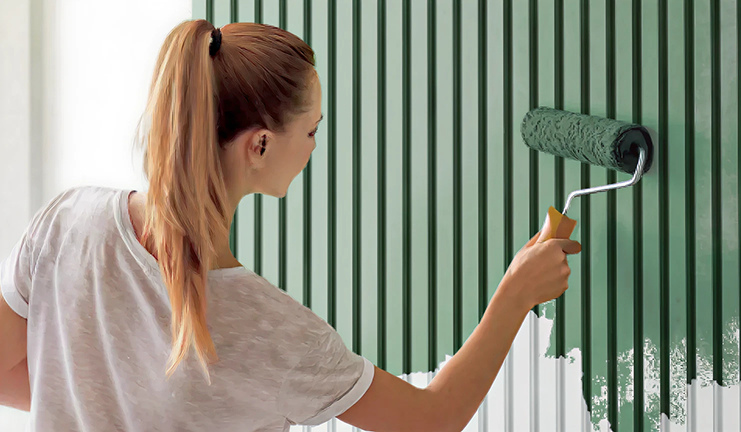
Three-dimensional, flexible wall panels are one of the hottest trends in interior design. They make it possible to finish tricky curves, columns and rounded walls seamlessly, with no visible joins. When looking for the ideal solution, it is worth considering the flexible, ultra-lightweight Thalia Flex decorative panel. In its white version, this product comes factory-coated with a special base coat, making it fully ready to paint straight away.

Want to personalize your interior and give your design a deep matte or elegant glossy finish? We explain step by step how to paint Thalia Flex panels, which paint to choose and which mistakes to avoid for a professional result.
What are the properties of HDPS polystyrene, and why is it worth painting?
By choosing the Thalia Flex white matte decorative wall panel, you are investing in cutting-edge technology. Panels in this range are made from high-density polystyrene (HDPS). This innovative material combines exceptional lightness with high hardness and resistance to mechanical damage and dents. Another advantage is that they are 100% waterproof, which means the panels can be installed even in damp rooms such as kitchens and bathrooms.
Because mouldings and wall decorations made from HDPS polystyrene come with a factory-applied white primer that offers excellent adhesion, they are ready to paint immediately after installation. Painting allows you to match the colour perfectly to the rest of the interior (a so-called total look) and effectively conceal tiny gaps at the joints.
Which paint is best for polystyrene panels?
Choosing the right product is key to achieving a durable, attractive finish. Painting HDPS wall panels requires solvent-free paints. Organic solvents could irreversibly damage and deform the delicate polystyrene structure.
-
Water-based paints (acrylic, latex): These are the safest and most highly recommended choice. They provide excellent coverage on HDPS, are odourless and easy to apply.
-
Paints designed for plastics: Specialist water-based acrylic enamels that provide a coating with enhanced scrub resistance.
Choosing the sheen: matte or high gloss?
-
Deep matte: Perfect for hiding minor surface imperfections and does not reflect light. It gives a room a modern, minimalist and cosy feel. An excellent choice for bedrooms and living rooms.
-
High gloss or satin: Reflects light beautifully, making the space look larger. A satin finish is usually easier to clean, making it ideal for hallways and kitchens.
Preparation and painting technique, step by step
To achieve a flawless finish without drips or streaks, follow proven application techniques.
1. Surface preparation and installation
Before painting, make sure the installed cladding is dry, clean and dust-free. To securely attach the panels to the wall, use the dedicated Creativa Expert mounting adhesive, which will ensure a strong, lasting bond. Before installation, a sturdy Cezar wooden sawhorse, which makes it easier to cut pieces accurately with a fine-toothed saw.
2. Choosing your tool: roller or spray gun?
-
Spray painting (spray gun): This is the most recommended method for deep three-dimensional textures. It allows the paint to be applied evenly into every recess in the 3D pattern, without the risk of streaks or excess paint building up in the grooves.
-
Brush and roller: If painting by hand, use a narrow, soft roller to cover flat, raised surfaces and a precision brush to spread the enamel into hard-to-reach areas. Avoid applying coats that are too thick—it is better to apply two thin coats.

The most common mistakes when painting HDPS panels—and how to avoid them
-
Painting panels before installation: This is a serious mistake. Always do the final painting after attaching the panels to the wall. This allows the paint to cover and neatly conceal the tiny installation gaps at the click joints.
-
Using solvent-based paint: Always check the product ingredients on the packaging carefully. Products containing aggressive solvents can react with polystyrene and damage the cladding structure.
-
Ignoring the rules of proportion in interior design: Remember that bold, dark, high-gloss colors on 3D surfaces can make small, narrow rooms feel overwhelming. For small spaces, light colors with a matte finish are a safer choice.
Summary and installation and painting checklist
Before starting work, make sure you have everything under control:
-
[ ] Panels cut with a fine-toothed saw on a stable surface.
-
[ ] Installed using a dedicated high-strength mounting adhesive.
-
[ ] Safe, water-based paint purchased (acrylic or latex interior enamel).
-
[ ] Surface dusted and thoroughly cleaned after installation.
-
[ ] Two thin coats planned (sprayed or applied with a brush and roller).
FAQ
Do HDPS polystyrene panels need to be primed before painting?
No, there is no need. The surface of Thalia Flex flexible wall panels is factory-coated with a matte lacquer that provides excellent adhesion, allowing decorative paint to be applied directly after dusting the surface.
What paint should I use to achieve a deep matte finish?
It is best to use high-quality, ultra-matte, water-based latex or acrylic paints. They are safe for polystyrene and create a uniform, non-reflective surface.
Can painted HDPS panels be washed?
Yes. Washability depends on the type of topcoat selected. Using high-quality latex paints or specialist acrylic enamels for plastics will give you a fully washable, moisture-resistant coating.
How are Thalia Flex panels joined together?
The panels can be joined in two convenient ways: with a precise CLICK connection (pressing one piece into another) or by sliding the edges together. This makes installation quick and easy to do yourself, while ensuring a seamless pattern.
Where can I find the full range of paintable panels and the necessary accessories?
A wide range of modern wall coverings, including options ready for color customization, is available directly from decorative wall panels from the Cezar online store.
Share:
The cost of installing 3D wall panels – how much will you save by choosing Thalia Flex? (Calculation and summary)
Skirting board corners, connectors and caps – how to use them?