
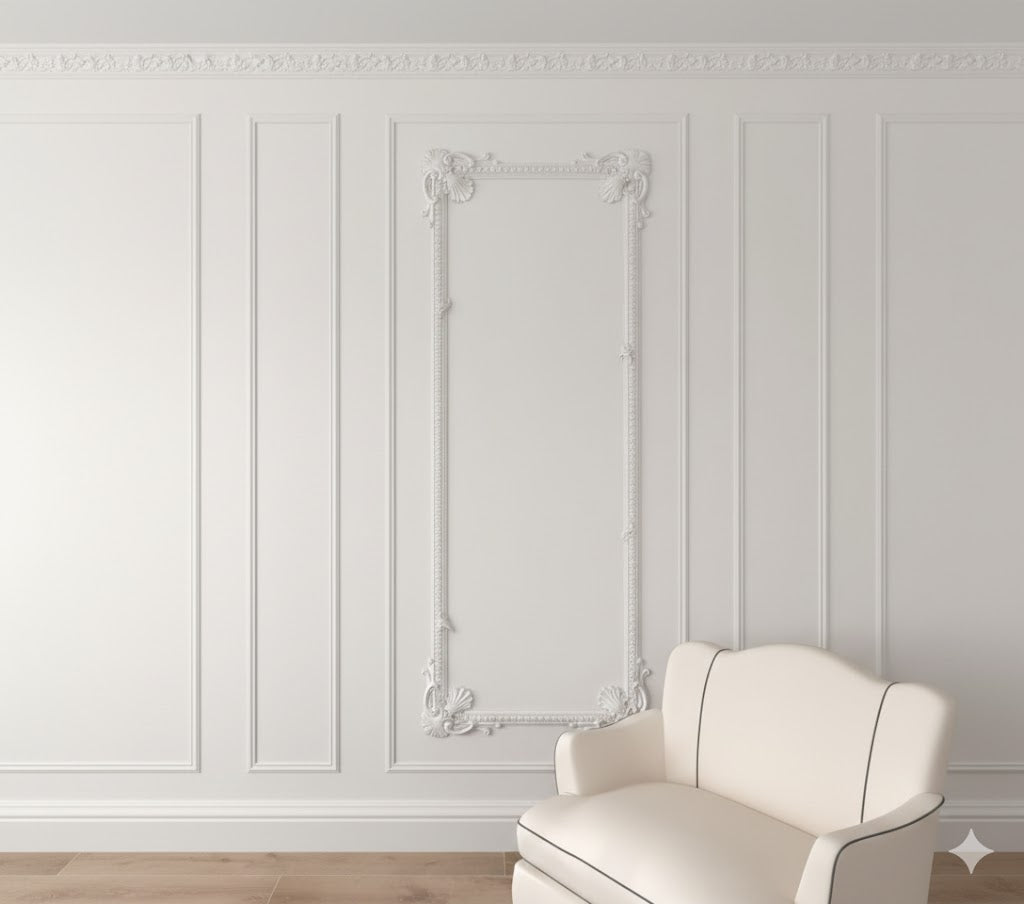
Classic accents in interiors never go out of style. One of the most effective ways to introduce them is with properly selected wall decor. Contemporary decorations combine old aesthetics with modern material durability. Thanks to them, even a simple, modern space gains depth, sophistication, and a unique character.
What is classic interior design?
Classic design is synonymous with harmony, symmetry, and timeless architectural balance. It derives from ancient, palatial traditions and elegant urban townhouses, where every detail had its precisely defined place. It is characterized by the use of a subdued color palette, noble materials, and clear divisions of surfaces. In contemporary arrangements, however, classic aesthetics do not mean copying historical interiors, but rather creatively utilizing their structures – such as proportional wall panels, cornices, and geometric ornamentation – to give the space elegance and visual order.

Where to start, i.e., the principle of proportion
Introducing decorative elements into an interior requires maintaining an appropriate scale. Expressive spatial structures work perfectly on large, high surfaces, where they can become the main focal point of the visual axis.
In smaller rooms, subtle and light profiles are a much better choice, as they will not overwhelm the interior. When choosing wall decorations, it is worth following a simple hierarchy: first, define the function and style of the room, and only then select the specific material, texture, and color.
Selection criteria: smooth or ornamental wall moldings?
The decision about the degree of ornamentation of decorative profiles depends on the desired final effect. Both forms of decoration allow for completely different spatial modeling:
-
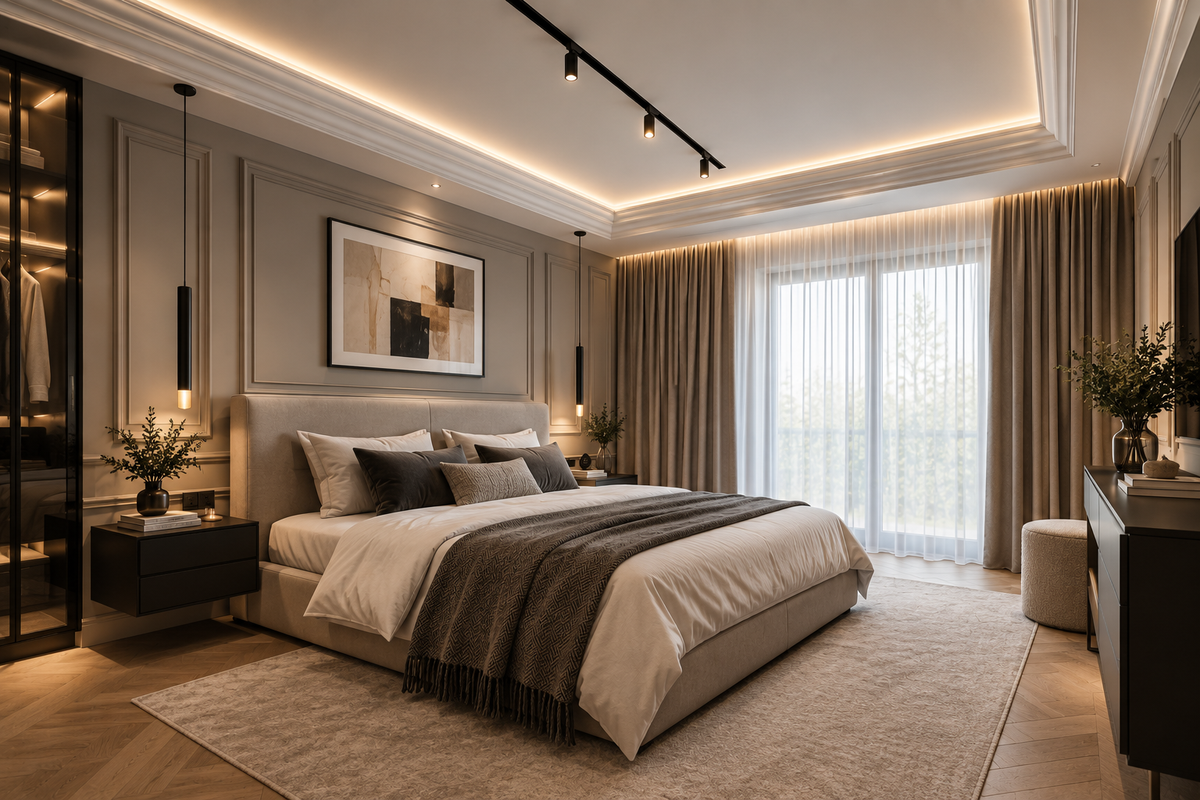
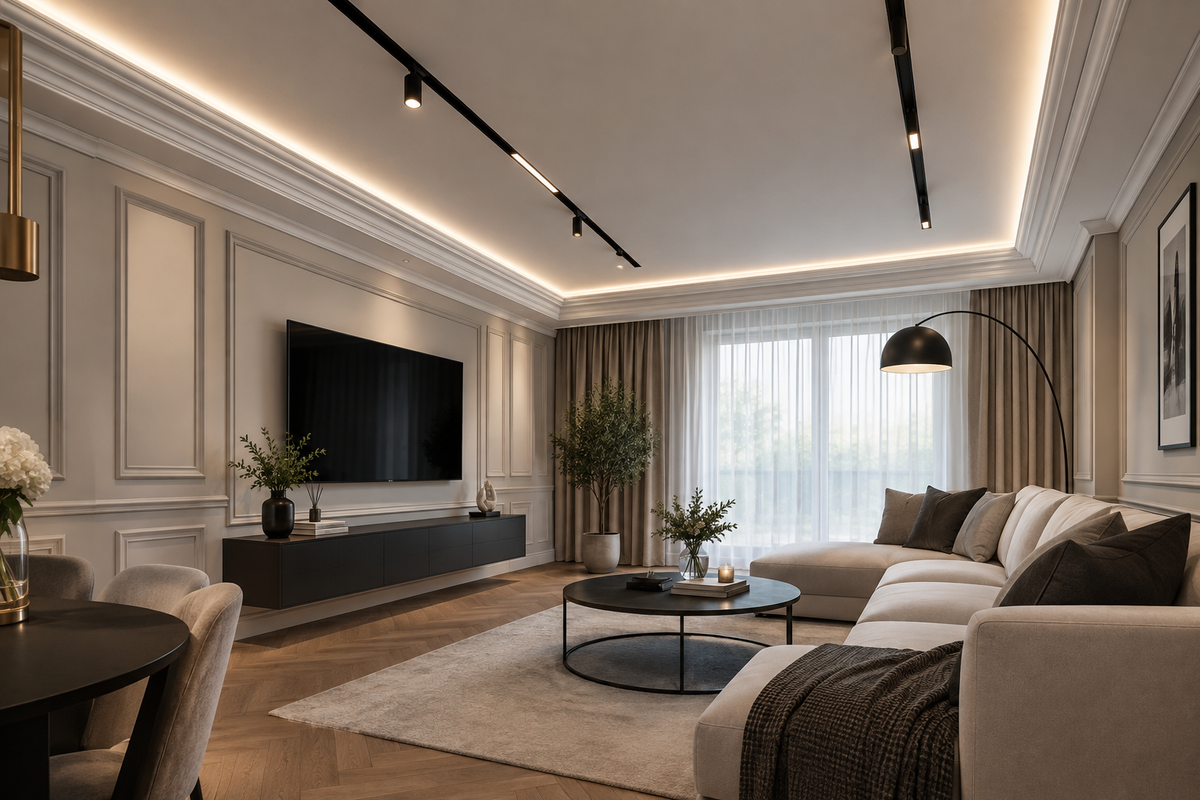
Minimalist classic: If you desire an elegant but understated effect, smooth wall moldings will serve as an excellent base. They allow for the creation of geometric wall panels, picture frames, and optical organization of surfaces.
-
Rich ornamentation: Traditional palace or Parisian townhouse styles require more decorative forms. Here, traditional stucco molding proves indispensable, beautifully interacting with lighting to cast sculpted shadows.
-
Comprehensive compositions: Building full door portals, frames around mirrors, or bookshelves is made easier with dedicated decorative stucco elements, such as corners, rosettes, or ornate bases and capitals..

Material matters: choose modern polystyrene
Traditional, heavy, and brittle plaster has been replaced by lightweight yet exceptionally durable plastics. Modern decorative profiles are made from lightweight extruded polystyrene (XPS)..
This material is fully moisture-resistant and lightweight, which simplifies installation using dedicated adhesives. These products come with a factory primer layer (matte base coat), making them ready for painting in any wall color immediately after installation. This allows for a perfect match between the decoration's shade and the wall color.
Common mistakes in stucco arrangement – what to avoid?
-
Wrong proportions of wall frames: Creating wall panels that are too small or too large relative to furniture and room height leads to optical chaos.
-
Stylistic chaos: Combining very rich, baroque ornaments with stark, modern minimalism without a cohesive central theme.
-
Careless corner cutting: Visible, mismatched gaps at profile joints in corners ruin the entire premium effect. Use fine-toothed saws or miter saws for cutting..
-
Ignoring the surroundings: Lack of connection between the lines of wall moldings and the height of door openings, windows, or baseboards.
Summary – checklists for a successful metamorphosis
-
[ ] Measure the room accurately and sketch the line layout on the wall before purchasing.
-
[ ] Match the degree of profile ornamentation to the size and height of the interior.
-
[ ] Choose moisture-resistant and lightweight polystyrene products that are easy to install yourself..
-
[ ] Remember to cut elements at a precise 45-degree angle in corners..
-
[ ] Paint the installed profiles with the same paint as the wall to achieve a cohesive structure..
FAQ – Frequently Asked Questions
Can stucco be installed in bathrooms or kitchens?
Yes. Profiles made of modern extruded polystyrene (XPS) are completely resistant to moisture. They can be safely used in challenging kitchen or bathroom conditions, without the risk of swelling or mold growth.
What should decorative moldings be painted with?
The profiles have a factory-applied primer coat, which means they can be painted with standard interior paints (e.g., acrylic, latex, or vinyl). The only important thing is that the chosen paint does not contain solvents.
How to aesthetically integrate wall stucco with the rest of the interior?
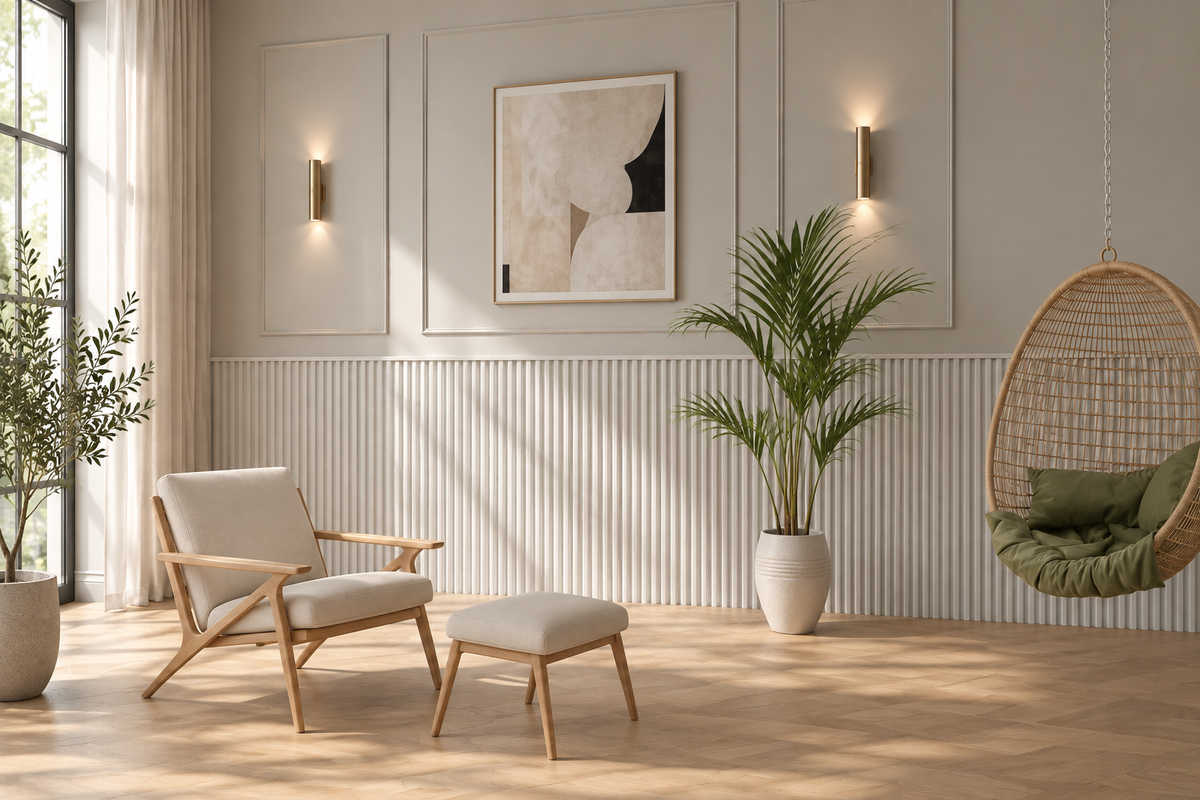
To achieve a fully harmonious and elegant effect, it is worth ensuring the consistency of all finishing details. Check how rich in forms and patterns stucco and wall decorations allows for the seamless connection of vertical wall moldings with floor and ceiling finishes, completing the entire composition into a cohesive whole.
Share:
Common Mistakes When Installing Skirting Boards. How to Avoid Them? [Guide]
Step-by-step guide: How to choose threshold strips for your interior?