
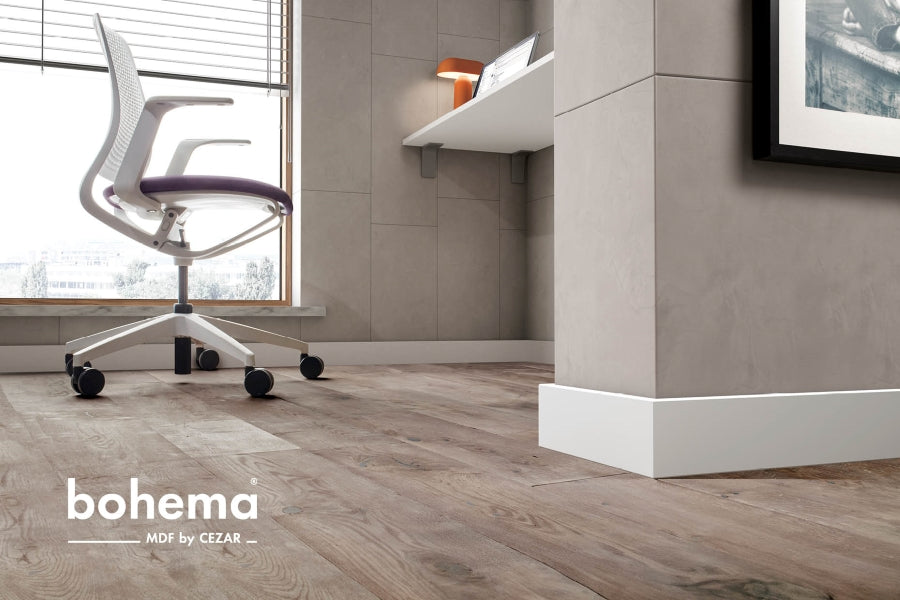
How to choose skirting boards? 5 rules you need to remember
The choice of skirting boards is a decision that can completely change the character of an interior. Although often treated as a minor detail, they actually tie the arrangement together and determine whether the room looks cohesive.
Here are 5 key rules to follow to avoid mistakes and achieve a professional effect.
1. Height matters – match the size to the proportions of the interior
The height of the skirting board directly affects the perception of space. A poorly chosen one can optically lower the room or, conversely, "disappear" against the wall.
-
Low skirting boards (up to 6 cm): Perfect for modern, minimalist interiors. They are discreet and do not overwhelm the arrangement.
-
Tall wall profiles: These are the domain of classic, tenement house, and modern premium spaces. By choosing tall skirting boards, you give the interior a sophisticated character, but remember that they require higher ceilings.

2. Color dilemma – white, floor color, or black?
The choice of skirting board color defines the floor finish line. There are three main design paths:
-
In the color of the floor: The most classic solution, which creates a calm, harmonious, and continuous line. It optically enlarges the floor surface.
-
Timeless white: A versatile and extremely popular choice. Elegant white skirting boards stand out beautifully against colored walls and suit most styles – from Scandinavian to glamour.
-
Contrasting black: A bold, modern accent. Choose black skirting boards for industrial and loft arrangements, where they will create a distinct geometry framing the space.
3. Match the material to the room's function
Aesthetics are one thing, but durability depends on the right material. Each room places different demands on skirting boards.
Traditional wood-based profiles are perfect for dry rooms like living rooms or bedrooms. In areas exposed to moisture and frequent cleaning – such as the kitchen or hallway – modern PVC and MDF skirting boards or ultralight, moisture-resistant polystyrene skirting boards will be indispensable. If you are looking for products designed with the environment and natural design in mind, earth-toned skirting boards, such as earth line skirting boards, will be the perfect choice.
4. Most common design mistakes
The most common mistake is ignoring door frames. Skirting boards should match door architraves – ideally, they should have the same thickness and color.
Another pitfall is using dark, contrasting skirting boards in very small and cramped rooms, which optically fragments the space and creates a sense of chaos.
5. Focus on synergy and modern features
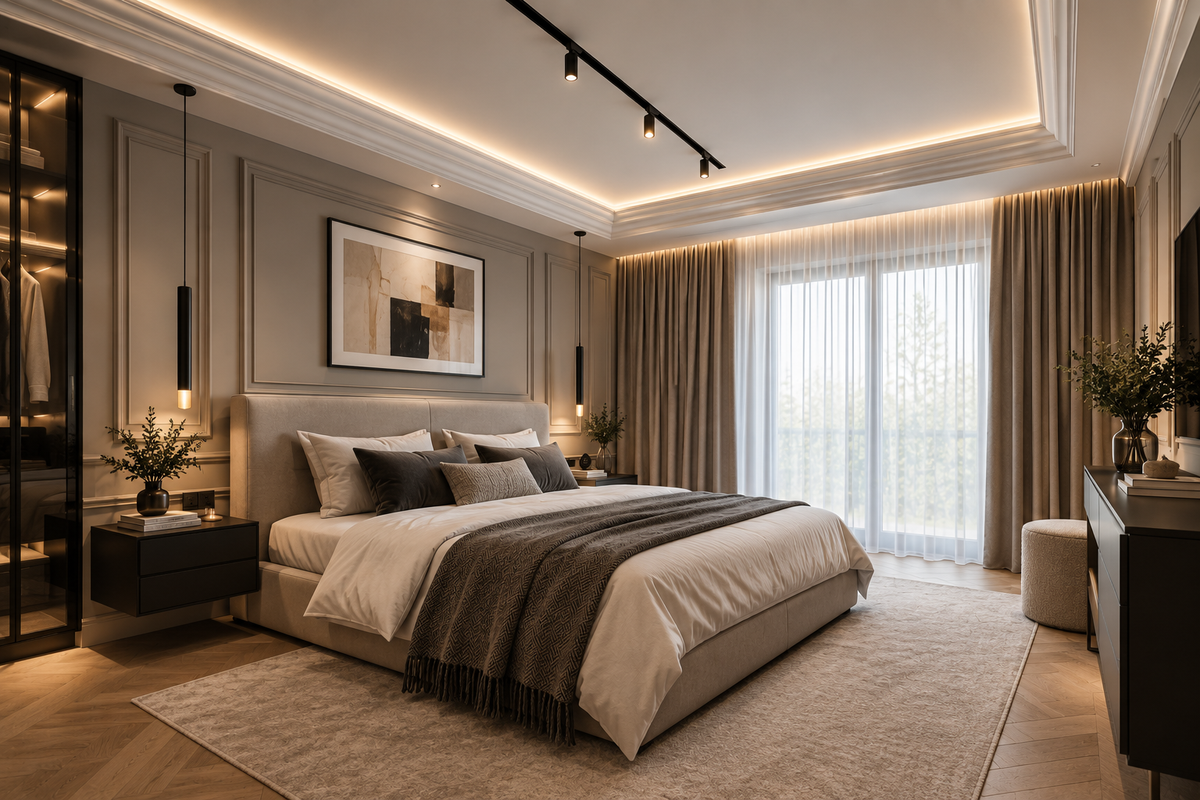
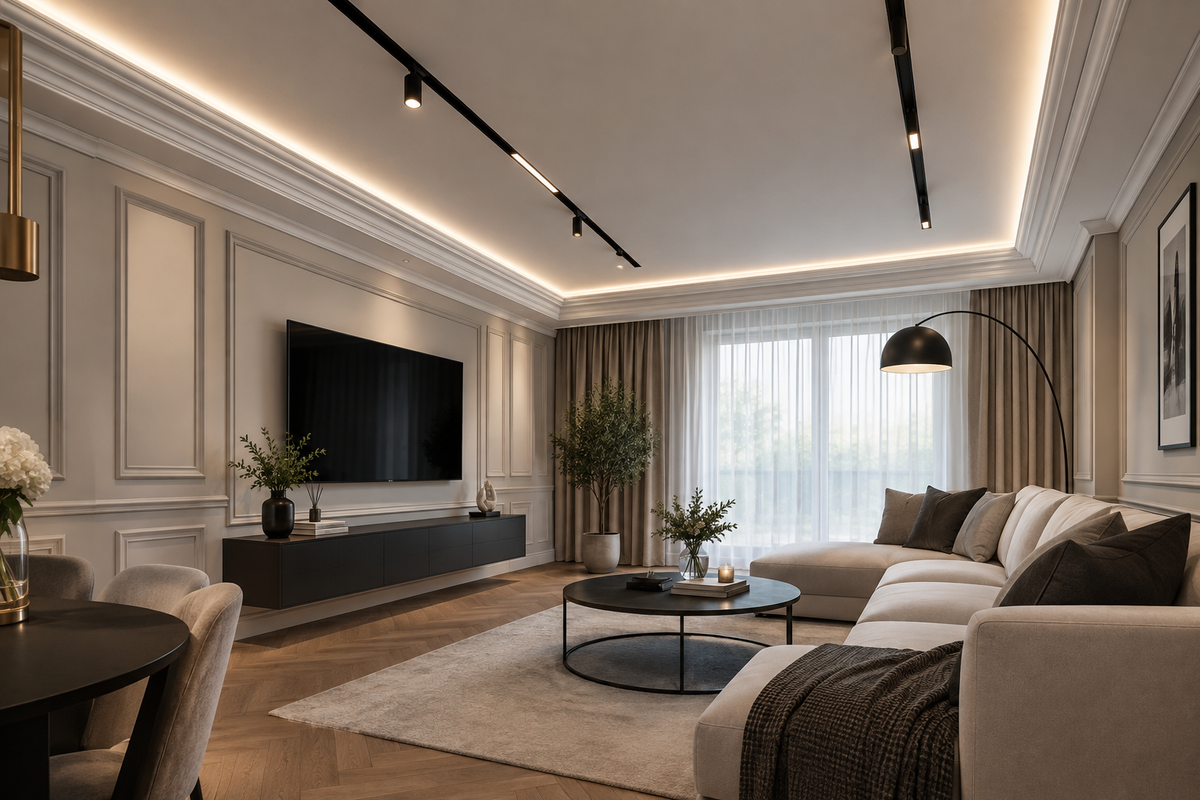
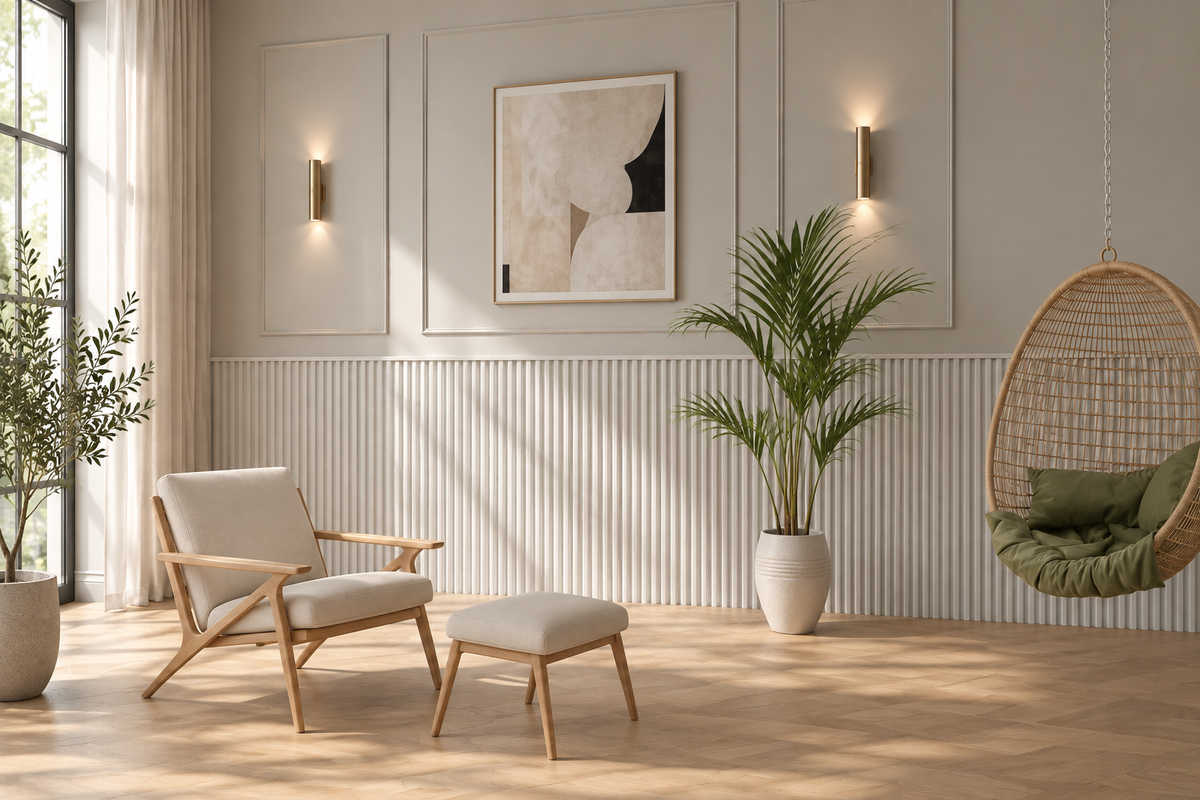
Contemporary design allows for combining decorative and technological functions. An interesting trend is the integration of skirting boards with LED lighting, which allows for the creation of atmospheric floor-level backlighting. It is also worth considering vertical consistency – matching the design of skirting boards with modern wall panels allows for a smooth transition of the finish from the floor to the wall.

Summary – shopping checklist
-
[ ] Match the skirting board height to the room height.
-
[ ] Coordinate the color of the skirting boards with the floor, wall, or door frames.
-
[ ] Choose a moisture-resistant material for the kitchen and bathroom.
-
[ ] Ensure the skirting board thickness conceals expansion gaps.
FAQ – Frequently Asked Questions
-
Do skirting boards have to match the floor color? No. You can also choose them to match the wall color (to visually heighten the interior) or opt for universal white, which suits most arrangements.
-
Which skirting boards are best for bathrooms and kitchens? In rooms with increased humidity, it is best to use waterproof PVC or polystyrene profiles, which do not absorb water and are easy to clean.
-
How to choose the height of skirting boards for a small town or apartment? In smaller or lower apartments, skirting boards with a height of 4 to 7 cm work best, as they do not overwhelm the space.
-
Where can I find profiles perfectly suited for a specific type of flooring?
A full range of products, including dedicated skirting boards for panels and tiles, can be found in the Cezar brand assortment, which facilitates precise selection for any material.
Share:
Installation Guide: Skirting boards on clips or glue? Choose the ideal system for your interior
Jak zamaskować różnicę poziomów podłogi? Praktyczny poradnik