
⏱️ Reading time: 3 min
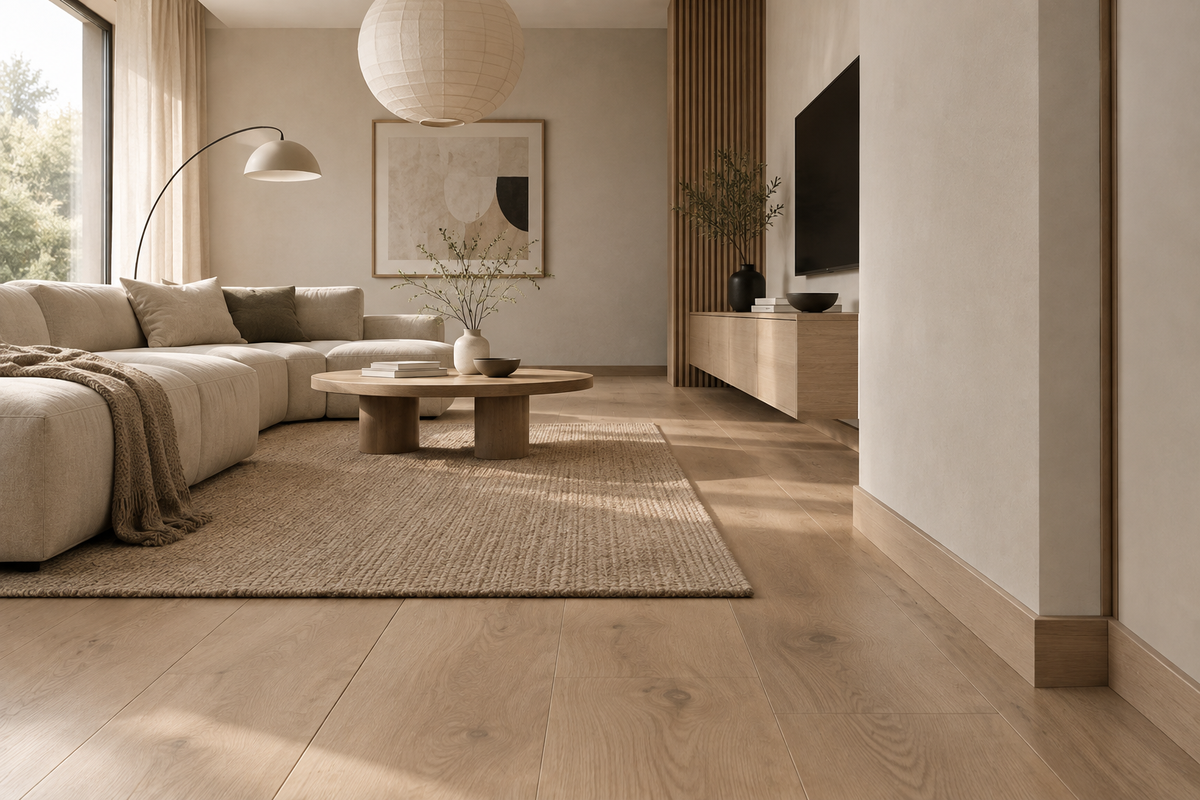
The Japandi style has reigned supreme in interior design for several seasons. It is a balanced combination of Scandinavian functionality (hygge) and the Japanese philosophy of respecting simplicity and natural imperfections (wabi-sabi). In spaces designed in this style, space, light, natural materials, and an absolute lack of unnecessary decorations are what matter.

Many people focus on selecting furniture or a neutral color palette, forgetting that the final perception of an interior is determined by the details. It is precisely poorly chosen floor finishes or edges that can disrupt even the most carefully planned arrangement.
What characterizes the Japandi style?
To create an authentic Japandi space, it is worth knowing its pillars:
- Minimalism and functionality – a limited number of items, each serving a specific purpose.
- Muted color palette – beiges, muted whites, warm grays, wood tones, and subtle, matte accents.
- Natural textures – wood, stone, ceramics, linen, and matte finishes.
- Simple forms and clean lines – giving up rich decorations in favor of geometry and discretion.

🛒 Recommended products from this category:
Check out our dedicated collection: Elegance Decor polystyrene skirting boards and choose the perfect solution for your interior.
How to choose floor finishes in the Japandi spirit?
In quiet, muted interiors, traditional, high, or decorated baseboards create unnecessary visual noise. The choice of details should be based on discretion and consistency with the finishing materials.
1. Low and straight skirting boards
The finishing of the wall and floor joints in the Japandi style should create a smooth, gentle transition. Straight, low profiles with a matte finish or subtle wood texture work best. A great solution is Elegance Decor polystyrene skirting boards, which feature high resistance to damage, moisture, and a simple, modern form that fits minimalist designs.
2. Discreet decorative profiles and accents
Instead of traditional joints, it is worth using thin, geometric lines. Subtle, narrow finishes allow for seamless joining of different materials on walls and floors. By using decorative and ornamental profiles, you can introduce a delicate, architectural touch to the interior without cluttering the space.
3. Wet areas (bathroom and kitchen)
Japandi very often appears in bathrooms imitating a home spa. In areas exposed to direct contact with water, insulation and the aesthetics of the shower area finish are key. Properly chosen shower tray profiles allow you to maintain a raw, clean drainage and tile line, while ensuring full sealing.

Most common mistakes when finishing Japandi interiors
- Using elaborate moldings: Richly decorated grooves and baseboards completely clash with Japanese simplicity.
- Glossy finishes: High-gloss lacquered surfaces reflect light in an artificial way – Japandi prefers deep matte.
- Contrasting, dark skirting boards on a light floor: Overly emphasizing the floor line visually shortens and fragments the space.
💡 Also read:
Thalia Flex – not only for wall curvesSummary – perfect finishing in 4 steps
- Opt for simplicity: Choose smooth, straight, low-profile profiles.
- Maintain a matte finish: Avoid high gloss on finishing elements.
- Ensure visual continuity: Match the color of the skirting boards with the tone of the floor or wall.
- Protect wet areas: In bathrooms, use dedicated, moisture-resistant technical and decorative profiles.

Frequently Asked Questions (FAQ)
Which skirting boards best fit the Japandi style?
Low, straight skirting boards in shades of natural wood, white, beige, or matte gray work best, blending into the background of the wall or floor.
Can metal or decorative profiles be used in the Japandi style?
Yes, provided they are brushed or matte, narrow profiles used moderately, e.g., to divide surfaces or elegantly finish edges.
Can polystyrene skirting boards be painted the color of the wall?
Yes, most high-quality polystyrene skirting boards are suitable for painting with wall paints (without solvents), allowing you to achieve perfect color consistency.
Where to buy proven skirting boards and finishing profiles for Japandi interiors?
You will find a wide selection of minimalist floor and wall finishes directly in the Elegance Decor skirting boards category on the Cezar store website.
Share:
#12 Production of HDPS finishing elements from the factory floor: How modern Cezar skirting boards and panels are made? x AKADEMIA CEZAR
Industrial and Loft Style – How to Combine Raw Concrete on the Wall with a Black Profile?