
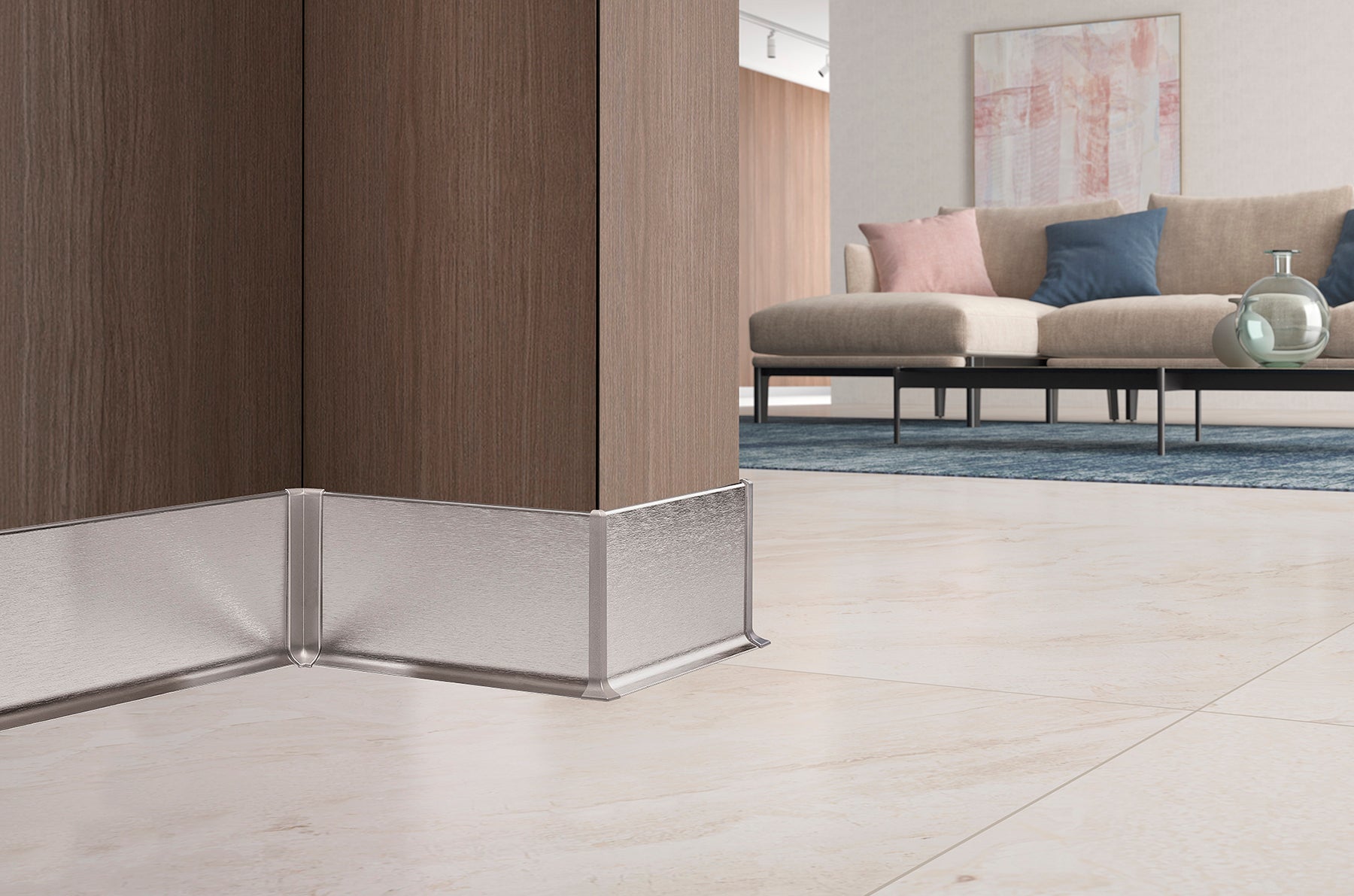
Choosing skirting boards is much more than just an aesthetic decision. The material from which the board is made influences its durability, moisture resistance, ease of installation, and the final design effect. In modern interiors, the skirting board is no longer an accessory—it becomes a conscious finishing element.
This guide presents the most popular skirting board materials : MDF, PVC, XPS, and modern hybrid skirting boards. Find out which material will work best in your interior.
Why does skirting board material matter?
Properly selected skirting board material:
-
affects the durability of the finish,
-
determines resistance to moisture and damage,
-
makes installation easier or more difficult,
-
determines the style of the interior – from minimalist to more decorative.
Therefore, the choice of material should be adapted not only to the aesthetics, but also to the conditions in the room.

MDF skirting boards – a classic in a modern version
What are MDF skirting boards?
MDF skirting boards are made of medium-density fiberboard. They are one of the most frequently chosen solutions for residential interiors due to their aesthetic appeal and attractive price-to-quality ratio.
Advantages of MDF strips
-
smooth, aesthetic surface,
-
can be painted in any color,
-
a wide selection of profiles – from straight to milled,
-
good fit for modern and classic interiors.
When is it worth choosing MDF strips?
MDF moldings are best suited for dry rooms like living rooms, bedrooms, or offices. They're a good choice if you want an elegant look and color matching with your walls.

PVC skirting boards – resistance and versatility
Why are PVC skirting boards so popular?
PVC skirting boards are valued for their high resistance to moisture and mechanical damage. Unlike MDF, PVC does not absorb water, making it ideal for use in more challenging environments.
Advantages of PVC skirting boards
-
resistance to moisture and temperature changes,
-
flexibility for easy installation,
-
durability and ease of cleaning,
-
universal use.
Where are PVC strips best suited?
PVC strips are ideal for kitchens, bathrooms, hallways, and rooms with high humidity. They're a practical choice for heavily used interiors.

XPS skirting boards – lightness and modern design
What makes XPS strips stand out?
XPS skirting boards are made of extruded polystyrene, which combines low weight with high moisture resistance. This modern solution is a popular choice for contemporary interiors.
Advantages of XPS strips
-
very low weight,
-
moisture resistance,
-
easy and quick installation,
-
modern, minimalist look.
What interiors are XPS strips suitable for?
XPS strips are perfect for modern homes where a light design and quick installation are key. They're a good choice for living rooms, bedrooms, and open-plan spaces.

Hybrid skirting boards – a new quality of interior finishing
What are hybrid skirting boards?
Hybrid skirting boards are a modern solution that combines the advantages of different materials. Their design ensures high moisture resistance, stability, and a perfect finish.
This is a response to the needs of modern interiors, where aesthetics must go hand in hand with durability.
Advantages of hybrid strips
-
high resistance to moisture and damage,
-
perfectly smooth surface,
-
precise edge finishing,
-
modern, premium character,
-
can be used throughout the home, without compromise.
Who are hybrid strips for?
Hybrid skirting boards are the perfect choice for those who demand the highest quality and versatility. They work well in living rooms, kitchens, and hallways alike, ensuring a cohesive look throughout the entire interior.
How to choose the skirting board material for a room?
When choosing skirting board material, it is worth considering:
-
humidity level in the room,
-
intensity of use,
-
interior design style,
-
expected durability and aesthetics.
MDF strips are perfect for dry rooms, PVC or XPS strips for damp rooms, and if you want a universal and uncompromising solution, hybrid strips are the way to go.
Skirting boards – material comparison
Each material has its advantages and specific applications:
-
MDF – aesthetics and classic elegance,
-
PVC – resistance and functionality,
-
XPS – lightness and modernity,
-
hybrid – durability, design and versatility.
A conscious choice of material allows you to create an interior refined in every detail.
Summary – which skirting boards should you choose?
The material of a skirting board has a huge impact on the durability and appearance of an interior. Well-chosen skirting boards not only aesthetically complement the floor but also enhance the overall design.
If you care about:
-
aesthetics → choose MDF or XPS,
-
resistance → choose PVC,
-
premium quality and versatility → choose hybrid strips.
It is the material of the skirting board that often determines whether the interior looks "good" or really great.
Share:
How to Choose the Perfect Wall Panels for Your Home - A Step-by-Step Guide
Modern skirting boards – 7 ideas for a stylish interior finish